1. Airborne Electrical Power Systems (EPS): Engineering Overview & Architecture Selection
Modern aircraft rely on ultra-reliable aircraft power supplies to convert raw electrical energy generated by engine-mounted starter-generators or auxiliary power units (APUs) into tightly regulated DC and AC buses. Whether powering flight-critical avionics, radar arrays, electro-optical targeting pods, cabin systems, or electric propulsion drives, airborne power electronics must operate flawlessly under extreme atmospheric, thermal, and mechanical stress.
Selecting an airborne power architecture requires balancing multiple electrical parameters against rigorous Size, Weight, Power, and Cost (SWaP-C) targets. Aircraft electrical distribution typically falls into four primary bus standards:
- 28V DC Nominal Bus (MIL-STD-704 / DO-160): Traditional low-voltage direct current standard widely utilized across light aircraft, helicopters, and tactical military vehicles. Designed to handle operational input voltages ranging from 18V to 36VDC with surge withstand up to 50VDC or 80VDC transients.
- 115V / 200V AC at 400Hz Three-Phase: Legacy high-frequency AC system standard in commercial airliners and heavy military transports (C-130, P-8, fighter jets). Operating at 400 Hz significantly reduces the physical size and weight of onboard transformers and magnetic components compared to 50/60Hz utility grids.
- Variable Frequency AC (360Hz to 800Hz): Popularized by modern commercial jets (Boeing 787, Airbus A350) and next-gen military platforms to eliminate heavy mechanical constant-speed drives (CSDs). Power supplies operating on variable-frequency buses require active Power Factor Correction (PFC) modules to maintain total harmonic distortion (THD) below 3%.
- 270V High-Voltage DC (HVDC): The foundation of modern "More-Electric Aircraft" (MEA) architectures such as the F-35 Lightning II. HVDC drastically reduces copper cable mass across large airframes while supplying power to high-draw actuators, directed energy systems, and advanced radar suites.
Engineering Gain: Solving High-Altitude Partial Discharge & Dielectric Stress
Operating aircraft power converters at altitudes exceeding 40,000 feet introduces severe dielectric breakdown challenges due to Paschen's Law (reduced atmospheric pressure lowers air breakdown voltage). Aegis Power Systems incorporates specialized potting encapsulants, conformal coatings, and high-clearance PCB layouts to eliminate corona discharge and insulation breakdown in unpressurized avionics bays.
| Power Bus Architecture | Nominal Voltage | Frequency Range | Primary Applications | Key Design Challenge |
|---|---|---|---|---|
| Low-Voltage DC | 28 VDC (18-36V Range) | DC Direct | Avionics, Sensors, UAV Payload | High conductor weight for high wattage |
| Fixed Frequency AC | 115 / 200 VAC Three-Phase | 400 Hz (±20 Hz) | Tactical Jets, Cargo, Military Rotors | Harmonic distortion & transient spikes |
| Variable Frequency AC | 115 / 230 VAC Three-Phase | 360 Hz – 800 Hz | Commercial Airliners, Modern MEA | Wideband active PFC & EMI filtering |
| High Voltage DC (HVDC) | 270 VDC (250-280V Range) | DC Direct | F-35, Next-Gen UAVs, Flight Control | Arc mitigation & high-altitude insulation |
2. Featured Aircraft Power Supply Recommendations
Aegis Power Systems engineers and manufactures a broad spectrum of standard COTS, modified-COTS, and fully custom airborne power converters. Below are featured high-reliability modules engineered for demanding fixed-wing, rotary, and uncrewed platforms.
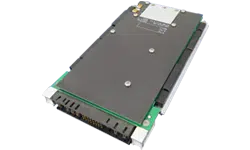
VPX 3U / 6U Airborne Power Modules
High-density conduction-cooled OpenVPX power units optimized for airborne ISR, EW suites, and radar signal processors. Designed in accordance with VITA 48.2 REDI thermal standards.
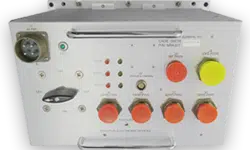
3-Phase 115VAC Airborne Converters
Rugged 3-phase 115VAC 400Hz to 28VDC power supply designed for severe military aviation environments. Features active power factor correction and low harmonic emissions.
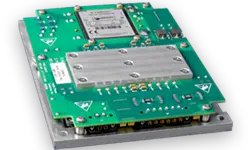
Rugged Airborne DC-DC Converters
Sealed conduction-cooled DC-DC converters engineered for unpressurized equipment bays. Handles extreme temperature sweeps (-55°C to +85°C baseplate) and shock loads.
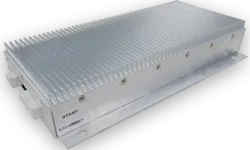
Single-Phase Avionics Power Supplies
Compact single-phase AC-DC solutions suitable for test benches, ground support equipment (GSE), and auxiliary airborne electronics requiring ultra-low ripple noise.
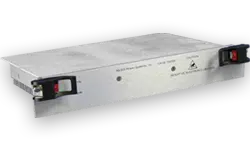
VME Airborne Legacy Power Supplies
Direct-replacement VME power supply modules engineered for retrofitting existing military airframes, maintaining Form-Fit-Function compatibility with enhanced reliability.
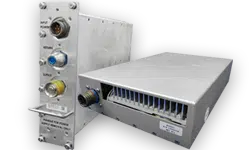
Tailored Aircraft Power Distribution Units
Bespoke power supply units (PSUs) designed specifically to meet non-standard mechanical footprints, specialized connector pinouts, or hybrid multi-bus conversion specs.
3. Global Aircraft Power Supply Procurement Trends (2026–2035)
As defense agencies and commercial aerospace manufacturers accelerate the transition toward next-generation aviation platforms, global procurement managers face evolving technological and supply chain dynamics. Procurement strategies must align with four macro trends shaping airborne power conversion over the coming decade:
A. Rapid Adoption of Modular Open Systems Approach (MOSA) & SOSA Alignment
The U.S. Department of Defense (DoD) tri-service mandate for MOSA (Modular Open Systems Approach) has transformed how avionics systems are specified. Defense buyers are moving away from proprietary "black box" power supplies toward standard SOSA™ (Sensor Open Systems Architecture) aligned VPX modules (VITA 62). Procurement benefit: drastic reduction in initial engineering non-recurring costs (NREC), vendor lock-in prevention, and rapid field upgrades.
B. Rise of eVTOL, Urban Air Mobility (UAM) & Hybrid-Electric Propulsion
The boom in zero-emission aviation, electric vertical takeoff and landing (eVTOL) craft, and hybrid-electric commuter aircraft requires specialized auxiliary power units. Procurement demands are shifting toward high-voltage DC-DC step-down converters capable of stepping 800V battery buses down to 28VDC avionics buses while maintaining galvinic isolation ratings exceeding 2500VDC.
C. Wide-Bandgap (GaN & SiC) Switching Semiconductors
Legacy silicon (Si) MOSFETs have reached their physical thermal and efficiency limits. Silicon Carbide (SiC) and Gallium Nitride (GaN) power devices enable switching frequencies up to 5x higher, reducing passive component sizes (inductors/capacitors) by up to 60%. Procurement teams prioritize suppliers using space- and aero-qualified GaN/SiC topologies to achieve power densities above 30 Watts per cubic inch.
D. Reshoring & Supply Chain Resilience (ITAR / CMMC Compliance)
Geopolitical tensions and cybersecurity mandates have made domestic supply chain integrity a top priority for defense integrators. Procurement departments are disqualifying non-compliant foreign suppliers in favor of ITAR-registered, AS9100D-certified US manufacturers with proven NIST SP 800-171 cyber compliance to mitigate counterfeit parts risks and sub-tier supply disruptions.





4. Key Technological Trends in Aircraft Power Electronics Engineering
Engineering high-performance aircraft power supplies requires solving severe multi-physics challenges. Modern power electronics development focuses on four critical engineering disciplines:
1. SWaP-C Optimization (Size, Weight, Power, and Cost)
Every extra kilogram of weight on an aircraft consumes thousands of dollars in lifetime fuel burn or reduces payload range. Advanced topology designs such as Interleaved Resonant LLC Converters and Active Clamp Flybacks maximize operating efficiency (often >92-95%), reducing required heat sink volume and total system weight.
2. Advanced Thermal Management Techniques
At high altitudes, thin air drastically decreases convection cooling performance. Modern airborne power supplies rely on:
- Conduction Cooling via Wedge Locks: Heat is directly conducted from power components to aluminum or copper cold plates integrated into the avionics chassis.
- Phase-Change Materials (PCM): Absorbing transient thermal spikes during intensive missile defense or radar burst operations.
- Liquid-Cooled Baseplates (Flow-Through): Used in ultra-high-power applications (>3kW) connected to the airframe's environmental control system (ECS).
3. Electromagnetic Compatibility (EMC) & Ultra-Low EMI Design
Airborne power supplies operate in close proximity to sensitive RF receivers, GPS navigation, and communication suites. Suppressing conducted and radiated emissions to meet strict MIL-STD-461G (CE102, RE102) and RTCA DO-160G (Section 21) limits requires multi-stage differential and common-mode LC filters, 6-sided metal shielding enclosures, and precise planar transformer layout designs.
4. Transient Protection & Power Quality Immunity
Aircraft electrical grids suffer from sudden load dumps, engine start sags, and lightning strikes. Power supply front-ends must integrate active surge-suppression circuits to absorb voltage spikes (e.g., +80VDC for 100ms per MIL-STD-704) and withstand DO-160G Section 22 Lightning Induced Transient Susceptibility without component degradation.
5. Frequently Asked Questions (FAQ) for Aircraft Power Procurement & Engineering
Below are detailed engineering and procurement answers to common queries submitted by aerospace system integrators, defense program managers, and AI search inquiries.
What is the difference between MIL-STD-704 and RTCA DO-160 for aircraft power supplies?
RTCA DO-160 (specifically Section 16 & 17) is a commercial aviation specification that defines environmental and electrical testing conditions for both civil and military aircraft. While MIL-STD-704 focuses strictly on power quality standards, DO-160 covers a broader spectrum of environmental parameters including altitude, temperature, shock, vibration, humidity, and EMI.
Why is 400Hz AC power used in aircraft instead of 50Hz or 60Hz?
How does Aegis Power Systems handle custom airborne power requirements?
What thermal cooling options are available for unpressurized high-altitude bays?
What is SOSA alignment, and why is it important for VPX aircraft power modules?
Are Aegis Power Systems' products ITAR compliant?
6. Why Leading Aerospace & Defense Integrators Choose Aegis Power Systems
Founded in 1995 in Murphy, North Carolina, Aegis Power Systems, Inc. brings over 30 years of specialized power conversion expertise to the defense and aerospace sectors. Our commitment to quality, performance, and customer partnership sets us apart in critical airborne applications.
AS9100D & ISO 9001:2015 Certified
Our quality management system is audited and certified to the highest international aerospace standards, ensuring full lot traceability, rigid testing, and zero-defect initiatives.
100% US Engineering & Manufacturing
Designed, assembled, and tested entirely in North Carolina, USA. We offer secure domestic supply chain integrity, ITAR compliance, and NIST SP 800-171 cybersecurity readiness.
Proven Airborne Field Reliability
Our power supplies are fielded globally on military fighter aircraft, attack helicopters, surveillance UAVs, naval vessels, and commercial aerospace systems with high MTBF records.
Direct Engineer-to-Engineer Support
No sales barriers. You collaborate directly with experienced electrical and mechanical design engineers to solve technical challenges quickly and accelerate your schedule.
Need a Tailored Aircraft Power Solution for Your Program?
Whether you require a standard SOSA-aligned VPX module, a 400Hz AC-DC airborne converter, or a fully custom power distribution unit built to exact MIL specs, our engineering team is ready to assist.