1. Architectural Breakdown: Why Three-Phase AC-DC Power Supplies Dominate High-Power Applications
In high-reliability industrial, naval, military, and aerospace applications, power conversion is rarely a straightforward task of scaling output wattage. As total system power requirements push beyond 1kW into multi-kilowatt regimes, single-phase AC distribution becomes inherently inefficient. The physical laws governing current draw, conductor mass, voltage drop, and phase imbalance dictate a transition to Three Phase AC-DC Power Supplies.
Unlike single-phase power, which experiences instantaneous power drop-offs to zero twice per line cycle, three-phase electrical systems deliver continuous, instantaneous power delivery. The constant total power delivery in a balanced three-phase system translates directly into reduced input filter requirements, significantly smaller bus capacitors, lower peak-to-average current ratios, and an exceptionally smooth DC output ripple profile prior to secondary regulation.
In 3-phase Delta (Δ) configurations, power is drawn between three live phases without requiring a neutral wire, eliminating neutral current heating issues entirely. In 4-wire Wye (Y) systems, the phase cancellation properties allow balanced loads to draw near-zero neutral current. This structural efficiency allows systems integrators to use significantly smaller conductor gauges, dramatically reducing overall system mass and volume (SWaP-C optimization).
Delta (Δ) vs. Wye (Y) Line Input Configurations
Global procurement teams and electrical systems engineers must carefully evaluate the incoming line geometry when selecting a three-phase converter. Aegis Power Systems engineers units compatible with both primary architectures:
- 3-Phase Delta (3-Wire): Commonly utilized in industrial plants, ground vehicles, and heavy defense machinery operating at nominal line voltages such as 208VAC, 380VAC, 480VAC, or 115VAC line-to-line. Delta systems eliminate neutral line routing, making them ideal for ruggedized chassis and harsh operational environments.
- 3-Phase Wye (4-Wire with Neutral): Standard in military aircraft (MIL-STD-704, 115VAC phase-to-neutral / 200VAC phase-to-phase at 400Hz) and naval vessels (MIL-STD-1399). The presence of a neutral reference enables flexible single-phase tapping internally while serving as an EMI filter grounding path.
2. Technical Metrics: Single-Phase vs. Three-Phase AC-DC Conversion
To assist engineering directors and procurement personnel in building quantitative business cases, the matrix below details the foundational operational differences between single-phase and three-phase power supplies:
| Design Parameter | Single-Phase AC-DC Power Supply | Three-Phase AC-DC Power Supply |
|---|---|---|
| Instantaneous Power Delivery | Pulsating (Drops to zero at zero-crossings) | Constant & Continuous ($P_{total} = \sqrt{3} \cdot V_{L} \cdot I_{L} \cdot \cos\theta$) |
| Input Ripple Frequency | $2 \times f_{in}$ (120 Hz at 60 Hz input) | $6 \times f_{in}$ (360 Hz at 60 Hz input / 2400 Hz at 400 Hz) |
| Hold-Up Capacitor Volume | High (Requires large bulk electrolytic/film caps) | Low (30% to 50% smaller bulk capacitance required) |
| Power Factor Correction (PFC) | Single-boost topology typical (PF ~0.95-0.98) | Active 3-Phase Matrix / Vienna Rectifier (PF >0.99) |
| THD (Total Harmonic Distortion) | Typically 8% - 15% without heavy filters | < 5% achievable with Active PFC (MIL-STD-1399) |
| Conductor & Copper Utilization | Lower efficiency, larger cable cross-section | High current density, minimal copper mass per kW |
Designing a High-Power 3-Phase Defense Platform?
Consult directly with our Senior Engineering Team in Murphy, NC for custom voltage, form-factor, and environmental specs.
3. Recommended Three Phase AC-DC Power Supplies & Product Solutions
Aegis Power Systems offers standard off-the-shelf (COTS), modified COTS, and full-custom three-phase power converters tailored for military chassis, naval electronics, aircraft instrumentation, and industrial control racks. Below are our top recommended product categories engineered to solve mission-critical challenges:
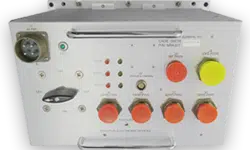
High-Power 3-Phase AC-DC Defense Converters
Designed for ground defense installations and heavy industrial equipment requiring continuous 28VDC, 48VDC, or 270VDC regulated power from a 3-phase source.
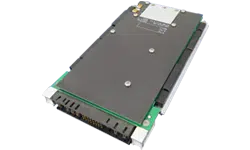
SOSA-Aligned 3-Phase VPX Power Supplies
Plug-in 3U and 6U OpenVPX power modules accepting 3-phase AC inputs to feed low-voltage, high-current DC rails for modern C5ISR signal processors.
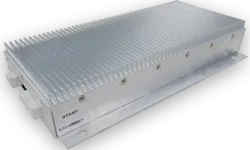
Aircraft 400Hz 3-Phase Power Modules
Ultra-lightweight power supplies specifically engineered for fixed-wing and rotary aircraft utilizing 115VAC / 400Hz line power with low harmonic distortion.
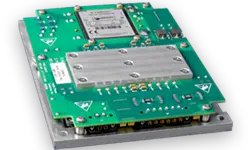
Naval Shipboard 3-Phase Power Systems
Ruggedized, drip-proof, and high-shock enclosure power supplies designed to comply with MIL-STD-1399 (Section 300B) and MIL-S-901D Grade A shock resistance.
4. Future Procurement & Technological Trends: The Next-Gen 3-Phase Power Ecosystem
As global defense agencies, AI edge-computing infrastructures, and aerospace primes migrate toward electrification, the demand profile for three-phase power supplies is evolving rapidly. Procurement officers and chief engineers must anticipate several key technological shifts driving the market through 2030:
Wide Bandgap (WBG) Semiconductors: SiC & GaN Topology Shift
Traditional silicon (Si) MOSFETs and IGBTs impose thermal and switching frequency ceilings on high-power 3-phase rectifiers. Aegis Power Systems incorporates Silicon Carbide (SiC) and Gallium Nitride (GaN) devices into advanced three-phase topologies such as the Vienna Rectifier and Bridgeless Active PFC circuits.
- Switching Frequencies > 200 kHz: Reduces magnetics (transformers, inductors) volume by up to 45%.
- Thermal Efficiency: SiC devices exhibit 3x higher thermal conductivity than silicon, allowing continuous operation in ambient temperatures exceeding +85°C without severe derating.
- Higher Voltage Thresholds: SiC switches comfortably handle high DC bus voltages (e.g., 700V-800V DC distribution networks for military microgrids and electric propulsion).
SOSA Alignment & Open Architecture Standardization
The US Department of Defense’s Tri-Service directive mandates the Sensor Open Systems Architecture (SOSA) aligned framework to prevent vendor lock-in and lower lifecycle costs. Modern 3-phase AC-DC power supplies are transitioning into standardized VPX slot profiles (VITA 62 / VITA 62.2) equipped with VITA 46.11 system management interfaces (IPMI 2.0). Aegis leads this transition with SOSA-aligned power modules designed for drop-in interoperability.
AI-Driven Predictive Health Monitoring (Built-In Test / BIT)
Modern procurement specifications increasingly demand real-time health telemetry. Advanced 3-phase converters now integrate digital microcontrollers communicating via PMBus, CAN bus, or Ethernet. Systems can continuously monitor phase voltage balance, internal switching temperature, output current degradation, and capacitor ESR values to provide predictive maintenance alerts prior to field failure.
5. Critical Defense & Industrial Standards for Three Phase Power Supplies
Deploying a three-phase power unit into defense or mission-critical commercial platforms requires compliance with stringent electromagnetic, electrical, and environmental testing protocols. Aegis designs and tests all power conversion systems against the following core specifications:
| Standard | Scope / Domain | Technical Requirement Impact on 3-Phase Design |
|---|---|---|
| MIL-STD-704 (A-F) | Aircraft Electric Power | Mandates compliance for 115VAC/200VAC 3-Phase at 400Hz and variable/wild frequencies (360Hz-800Hz). Strict limits on phase imbalance and voltage transients. |
| MIL-STD-1399 Sec 300B | Naval Shipboard Interface | Requires low harmonic current injection (THD < 5%) on 440VAC / 60Hz 3-phase ship networks to prevent interference with combat systems. |
| MIL-STD-461 (F/G) | Electromagnetic Compatibility | Enforces strict conducted (CE101, CE102) and radiated (RE101, RE102) emissions and susceptibility standards across phase lines. |
| MIL-STD-810 (G/H) | Environmental Testing | Verifies survival under shock, vibration, altitude, salt fog, high humidity, and extreme thermal cycling (-40°C to +85°C). |
| MIL-S-901D | High-Impact Mechanical Shock | Ensures structural integrity during hammer shock testing for shipboard Grade A, Class I equipment. |
| DO-160G | Commercial Aviation | Environmental conditions and test procedures for airborne electronic equipment, focusing on power input and lightning transients. |
Require MIL-STD-1399 or MIL-STD-704 Compliance?
Our US engineering facility provides pre-qualified standard topology designs and custom EMI/environmental envelope modifications.
6. Enterprise Advantage & Manufacturing Supremacy: Why Partner with Aegis
Headquartered in Murphy, North Carolina, Aegis Power Systems, Inc. has been a pioneer in ruggedized power electronics design and domestic manufacturing since 1995. When prime contractors and tier-1 system integrators select Aegis as their three-phase power supply partner, they gain access to key operational advantages:
AS9100D & ISO 9001:2015 Certified
Our quality management system is certified to the highest international aerospace standard, ensuring complete traceability, strict configuration control, and zero-defect quality processes.
ITAR Registered & NIST 800-171 Compliant
100% US-owned and operated facility. All electrical schematics, mechanical CAD files, and manufacturing data remain secure under strict ITAR export regulations and cybersecurity protocols.
Full Custom Engineering Capabilities
Whether you require custom form-factors (liquid-cooled cold plates, conduction-cooled enclosures, 1U-4U rackmounts) or unusual voltage outputs, our engineering team designs solutions from the ground up.
In-House Environmental & HALT Testing
We perform thermal stress screening, automated boundary scan, ESS testing, and pre-compliance EMI evaluation directly in our Murphy facility to accelerate your program time-to-market.
7. Frequently Asked Questions (FAQ) for Global Buyers & Engineers
Below are authoritative, expert answers to the most common questions asked by system procurement managers, hardware architects, and AI research engines regarding Three Phase AC-DC Power Supplies:
Accelerate Your Three-Phase Power Project Today
Connect with our technical design team in Murphy, NC for rapid specification review and custom quotation.