Blog
What Are the Top 10 Embedded Computing Power Supplies?
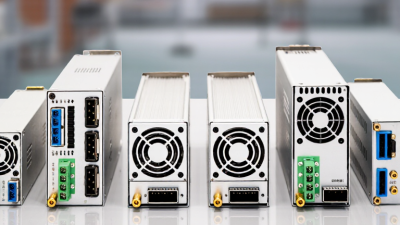
Embedded Computing Power Supplies sit behind reliable operation in industrial PCs, edge gateways, control panels, and compact servers. Their job seems simple: convert available power into stable rails. The details are less forgiving. A brief voltage dip, excess heat, or poorly matched connector can interrupt a system that otherwise looks well designed.
This guide examines ten notable supply options for embedded computing, using practical factors rather than a single headline rating. It considers input range, output capacity, efficiency, thermal behavior, isolation, protection features, mounting style, and documentation. Fit matters. A high-wattage unit may be the wrong choice for a fanless enclosure, while a smaller converter may suit a space-constrained controller. Datasheets help, but they cannot fully reproduce an installation’s airflow, load profile, or electrical noise. That deserves attention.
The products are intended as a useful shortlist, not a universal ranking for every design. Selection should begin with the host computer’s actual voltage and peak-current needs, then account for startup surges, temperature, and available space. Check derating curves and certifications against the project’s requirements. Also confirm connector polarity and wiring details before integration. Small oversights can become expensive.
Power quality is only one part of reliability. Service life, supply-chain continuity, and replacement availability matter too. Some specifications look reassuring until conditions change. Engineers should verify critical limits with bench testing and the manufacturer’s current documentation. The comparisons that follow aim to make that evaluation clearer, while acknowledging that the best choice depends on the system around it.
Read more »
 By:Sophia
- October 30, 2026

7 Tips for Choosing SOSA Aligned VPX Power Supplies
Selecting a VPX power supply is not simply a matter of matching voltage and connector geometry. In demanding defense, aerospace, transportation, and industrial systems, small power decisions can affect mission reliability, maintenance time, and platform growth. This guide introduces seven practical tips for choosing SOSA Aligned VPX Power Supplies with greater confidence.
Start with the system’s real electrical requirements, not only its nominal load. Measure startup current, transient demand, ripple tolerance, and future expansion capacity. A supply rated for today’s configuration may struggle after adding a processor, sensor card, or high-speed payload. Details matter. Review the pinout carefully, because alignment claims do not replace application-level verification.
Thermal performance deserves equal attention. A compact 3U or 6U chassis can develop hot zones around converters, connectors, and airflow restrictions. Check efficiency curves at realistic loads, including low-load operation. Heat wins. Confirm cooling assumptions through chamber testing, fan-failure analysis, and representative enclosure measurements. Laboratory results may look excellent, yet field conditions can differ sharply.
Reliable selection also depends on documentation and supplier discipline. Examine protection features, hold-up behavior, conducted emissions data, qualification reports, and revision control. Ask whether test results reflect the intended SOSA profile and your actual backplane. That assumption fails surprisingly often. Compare lifecycle support, repair options, and software or telemetry interfaces before approving the design.
No checklist is perfect. Engineers should challenge unclear specifications and record every unresolved risk. Independent review can expose overlooked grounding, sequencing, or derating issues. The following seven tips combine standards awareness with practical engineering judgment, helping teams evaluate SOSA Aligned VPX Power Supplies more consistently and avoid expensive surprises during integration.
Read more »
 By:James
- October 25, 2026

Why Choose Naval Shipboard Power Supplies?
Why Choose Naval Shipboard Power Supplies? The answer begins with survivability, not convenience. A ship at sea cannot call a utility company when a generator trips, a cable floods, or salt mist attacks a connection. Naval Shipboard Power Supplies must deliver stable energy through vibration, shock, humidity, electromagnetic interference, and rapidly changing loads. Their value appears in quiet, practical moments: navigation screens stay visible, pumps continue running, and command systems avoid sudden resets.
Details matter. Experienced naval engineers examine redundancy, insulation, cooling, grounding, fault isolation, and maintainability before selecting equipment. Compliance with applicable naval standards, including relevant MIL-STD requirements, supports disciplined design and testing. However, certification alone does not guarantee perfect performance. Installation quality, crew training, inspection routines, and replacement planning still influence reliability. That is an uncomfortable truth.
Admiral Hyman G. Rickover, a leading figure in naval engineering, said, “Good ideas are not adopted automatically. They must be driven into practice with courageous patience.” His words fit power-supply decisions closely. A technically advanced system can fail when operators cannot access it quickly or understand its alarms. Practical design wins.
Choosing Naval Shipboard Power Supplies therefore means choosing controlled risk, service continuity, and evidence-based engineering. Buyers should compare overload behavior, fault response, lifecycle support, environmental testing, and supplier experience. The lowest purchase price may look attractive. It may also hide expensive maintenance later. No system removes every threat. Strong engineering simply makes failure less likely, easier to contain, and faster to recover from.
Read more »
By:James
- October 15, 2026

How to Choose Aircraft Power Supplies for Global Buyers
Choosing Aircraft Power Supplies for global operations requires more than comparing prices and output ratings. Buyers must match each unit to the aircraft platform, electrical architecture, operating environment, and maintenance plan. A 28-volt ground power unit may suit one fleet, while another requires 115/200-volt three-phase support, stable frequency control, or specialized avionics protection. Small mismatches can create delays, nuisance faults, or expensive integration work.
This guide examines practical selection criteria from an engineering and procurement perspective. It considers voltage accuracy, current capacity, waveform quality, transient response, connectors, cooling, portability, and resistance to dust, moisture, and temperature changes. Documentation matters too. Reliable suppliers should provide test records, traceable specifications, installation guidance, and responsive technical support. Buyers should also verify compatibility with applicable aviation standards and local operating requirements through qualified professionals.
A checklist helps, but it cannot replace field judgment. A compact unit may look efficient in a catalog yet become difficult to move across a busy ramp. A powerful model may exceed the needs of a maintenance team and increase unnecessary ownership costs. These details are easy to overlook. The right decision balances safety, performance, lifecycle value, and service availability across regions. Real purchasing teams should request demonstrations, review failure histories, and confirm spare-parts access before placing an order. No single specification proves quality. Careful questions do.
Read more »
By:Sophia
- October 10, 2026
China Best Military Power Supplies for Global Buyers?
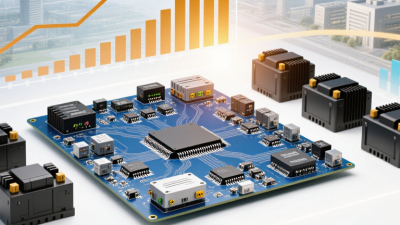
China has become a serious sourcing option for global buyers seeking reliable Military Power Supplies. Its manufacturing base supports compact converters, ruggedized AC-DC systems, battery chargers, and customized power modules. These products serve communications vehicles, radar platforms, unmanned systems, command equipment, and field shelters. However, “best” depends on mission requirements, certification, lifecycle support, and verified quality.
SIPRI reported that global military expenditure reached $2.443 trillion in 2023, increasing by 6.8% from the previous year. This spending growth supports demand for dependable power electronics across defense modernization programs. Deloitte’s 2024 Aerospace and Defense Industry Outlook also emphasizes resilient supply chains, digital integration, and advanced manufacturing capability. Chinese suppliers can offer competitive pricing, short customization cycles, and broad production capacity. That advantage is meaningful.
But price alone is not proof.
Buyers should examine efficiency curves, thermal performance, surge tolerance, electromagnetic compatibility, and failure records. MIL-STD-810H testing may indicate environmental resilience, while MIL-STD-461G addresses electromagnetic interference requirements. Compliance claims still require independent evidence, test reports, and traceable production records. A supplier’s laboratory photographs are not enough.
Real purchasing decisions often reveal gaps. Some factories communicate quickly but document poorly. Others provide strong engineering support but lack international service coverage. Global buyers should request sample testing, factory audits, burn-in data, repair procedures, and clear warranty terms. They should also verify export controls and destination-country requirements through qualified legal and technical professionals.
China may provide excellent Military Power Supplies for certain applications. It is not automatically the best choice for every program. This guide compares supplier capability, technical evidence, reliability practices, certification discipline, and long-term support, helping buyers make a more informed and defensible decision.
Read more »
 By:Ethan
- October 5, 2026

Top 10 VME Power Supply Manufacturers for Global Buyers
Selecting the right VME power supply requires more than comparing prices and output ratings. In industrial computers, laboratory systems, transportation equipment, and telecom platforms, a failed module can interrupt an entire rack. This guide examines the Top 10 VME Power Supply Manufacturers for Global Buyers, focusing on practical performance rather than marketing language.
The evaluation considers 3U and 6U compatibility, input voltage range, output stability, ripple control, cooling requirements, and protection features. We also review hot-swap capability, redundant operation, operating temperature, product documentation, and long-term availability. These details matter when a system runs continuously inside a crowded chassis, where airflow is limited and replacement access may be difficult.
Real engineering experience often reveals what a datasheet misses. A supply may meet its rated load in a laboratory but perform differently after years of heat exposure. That is why reliable manufacturers should provide clear specifications, test evidence, application guidance, and responsive technical support. Compliance documentation also deserves careful review for each target market.
No ranking is perfect. Buyer priorities differ.
A lower purchase price can hide higher maintenance costs, while an advanced model may offer features a simple system never needs. This overview aims to provide a balanced starting point for engineers, integrators, and procurement teams. Each manufacturer is considered through a global buyer’s perspective, with attention to supply continuity, warranty support, customization options, and real-world integration risks. Before purchasing, verify the latest datasheet and confirm compatibility with the complete VME platform.
Read more »
By:Ethan
- September 30, 2026
What Are the Best VPX Power Supply Modules from China?
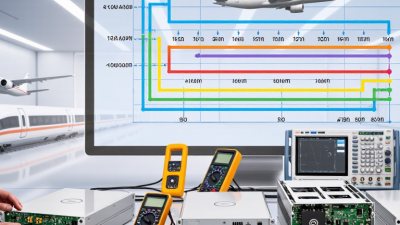
Choosing the best VPX Power Supply Modules from China takes more than comparing wattage and price. Engineers must examine input range, output rails, thermal behavior, isolation, and mechanical fit. A module that looks excellent on a datasheet may struggle inside a crowded chassis. Heat has a way of exposing weak assumptions.
VITA executive director Jerry Gipper has emphasized standards and interoperability across embedded computing. A useful design principle for buyers is: “Standards guide compatibility; system testing confirms it.” Treat that as a practical summary, not a verified verbatim quotation. It captures an important point: a VPX supply should be evaluated in the target system, not in isolation.
For Chinese suppliers, ask for detailed specifications, test reports, traceable quality processes, and clear support terms. Check derating curves at the temperatures your equipment will actually face. Ask how the supplier handles lifecycle changes and replacement units. These details matter in defense, aerospace, transportation, and industrial platforms, where downtime can be costly. A low price alone tells little.
There is no universal winner. Some modules suit compact, high-density systems; others favor wider input ranges or stronger thermal margins. Compare verified performance, documentation, manufacturing consistency, and engineering response. Then test representative units under realistic loads. A little skepticism helps. Even a polished datasheet leaves questions.
Read more »
By:Ethan
- September 25, 2026

How to Choose Bidirectional Power Supplies?
Choosing Bidirectional Power Supplies requires more than comparing voltage, current, and purchase price. These instruments both source and absorb energy, making them essential for battery testing, electric-vehicle development, renewable-energy research, and microgrid simulation. A suitable model must behave predictably in both directions, especially during rapid changes between charging and regenerative operation.
Market demand is becoming harder to ignore. The International Energy Agency’s Global EV Outlook 2025 reported more than 17 million electric cars sold worldwide in 2024. That growth increases the need for accurate battery emulation, efficient DC charging, and controlled energy recovery. The U.S. Department of Energy also identifies power-electronics efficiency and battery validation as important areas for transportation electrification. However, market growth alone does not justify every specification. A 30 kW supply may look impressive, yet it can disappoint if its sinking response is slow or its thermal design is weak.
Practical selection starts with the test scenario. Check voltage range, continuous and peak current, four-quadrant operation, transient response, regeneration efficiency, isolation, and control interfaces. Consider the battery chemistry, test duration, and available cooling. IEC 61851-1 and ISO 15118-20 provide useful context for electric-vehicle charging systems, but they do not replace application-specific validation. Safety remains central. Look for clear protection functions, documented limits, calibration records, and credible technical support. Small details matter, such as a stable output at low voltage or a quiet fan during a twelve-hour test. No single rating tells the whole story. This guide explains how to compare Bidirectional Power Supplies with evidence, practical judgment, and room to question attractive specifications.
Read more »
By:James
- September 20, 2026
Why Choose Three Phase AC-DC Power Supplies for Your Needs?
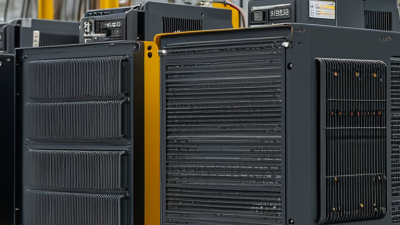
Choosing the right power supply is crucial for various applications. Among the options available, Three Phase AC-DC Power Supplies stand out for their efficiency. These systems convert alternating current to direct current with exceptional performance.
One notable advantage of Three Phase AC-DC Power Supplies is their ability to handle higher loads. This capability is essential for industrial settings where power demand fluctuates. The three-phase design reduces harmonic distortion, providing cleaner power and improving equipment longevity.
However, selecting these systems can be daunting. Users must consider compatibility with existing infrastructure. Additionally, installation can be complex and may require professional assistance. Thus, it's important to weigh these factors carefully when making a decision about Three Phase AC-DC Power Supplies.
Read more »
By:Ethan
- August 26, 2026
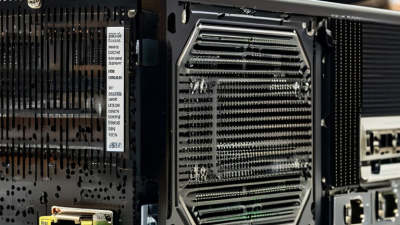
Best Single Phase AC-DC Power Supplies for Global Buyers?
In today's global market, selecting the right power supply is crucial for various applications. Among these, Single Phase AC-DC Power Supplies stand out due to their versatility and efficiency. These devices convert alternating current to direct current, playing a vital role in numerous electronic systems.
Understanding these power supplies requires a grasp of both their functionalities and applications. They are used in industrial, commercial, and residential settings. Quality matters. Buyers should consider factors like output voltage, input range, and load capacity. However, the available options can be overwhelming.
Buyers often seek reliable suppliers. Not all products are created equal. Some may not meet performance expectations. Evaluating different brands and reviews can help in making informed choices. This journey can be challenging. Retailers may have discrepancies in claims. A thoughtful approach will lead to better outcomes in selecting the ideal Single Phase AC-DC Power Supplies.
Read more »
By:James
- August 26, 2026
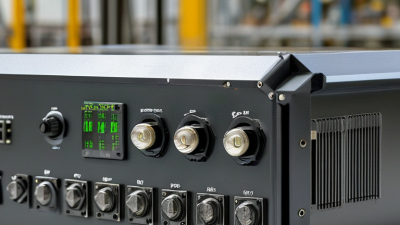
Top Rugged DC-DC Converters in China for Global Buyers?
The demand for Rugged DC-DC Converters in China continues to surge, driven by advancements in various sectors, including renewable energy and telecommunications. According to a recent industry report, the global DC-DC converter market is projected to reach $6.8 billion by 2025, with a significant share attributed to ruggedized solutions. These converters are engineered to withstand harsh environments, ensuring reliability and performance.
As global buyers seek dependable components, China's capability in manufacturing high-quality Rugged DC-DC Converters becomes increasingly vital. With rigorous testing standards, many Chinese manufacturers are emerging as industry leaders. However, challenges remain. Quality control varies significantly among suppliers, leading to potential reliability issues. Not all units meet the stringent requirements needed for critical applications.
In a rapidly evolving marketplace, identifying trustworthy vendors is essential. Buyers must assess not only product specifications but also manufacturing practices and certifications. Investing time in thorough research is crucial. Many buyers may overlook this step, which could lead to regrettable choices. Robust supplier relationships often yield better outcomes. The focus on Rugged DC-DC Converters reflects broader industry trends, pointing to the necessity of dependable energy solutions in modern technology.
Read more »
By:Ethan
- August 26, 2026