Technical Articles & Insights

Defense & Aerospace Power Blog

Engineering updates, technical articles, and industry insights on rugged military power supplies, VPX modules, and custom power conversion solutions.

0%

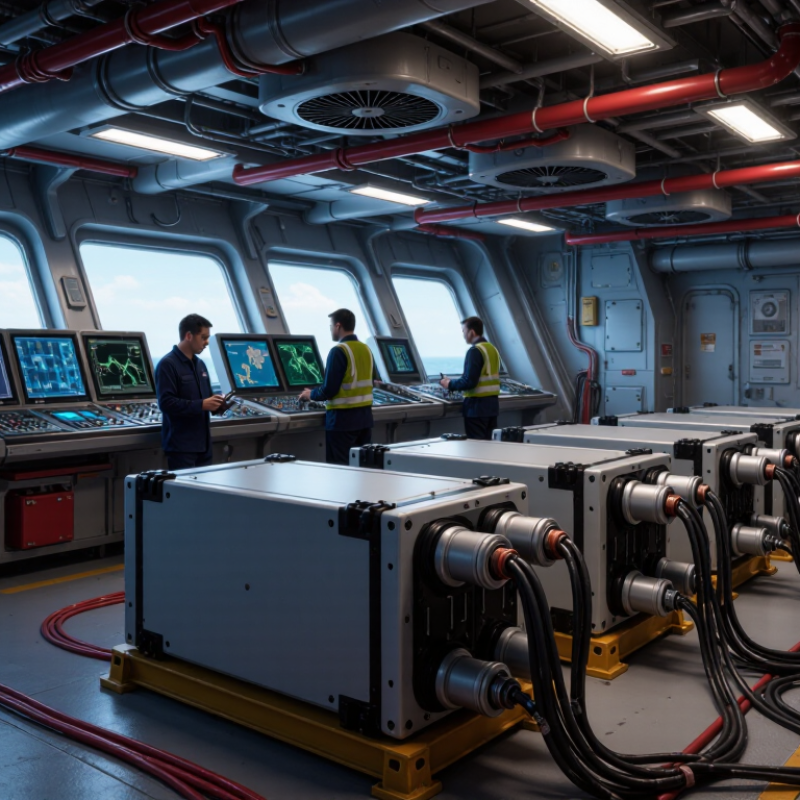
Why Choose Naval Shipboard Power Supplies? The answer begins with survivability, not convenience. A ship at sea cannot call a utility company when a generator trips, a cable floods, or salt mist attacks a connection. Naval Shipboard Power Supplies must deliver stable energy through vibration, shock, humidity, electromagnetic interference, and rapidly changing loads. Their value appears in quiet, practical moments: navigation screens stay visible, pumps continue running, and command systems avoid sudden resets.

Details matter. Experienced naval engineers examine redundancy, insulation, cooling, grounding, fault isolation, and maintainability before selecting equipment. Compliance with applicable naval standards, including relevant MIL-STD requirements, supports disciplined design and testing. However, certification alone does not guarantee perfect performance. Installation quality, crew training, inspection routines, and replacement planning still influence reliability. That is an uncomfortable truth.

Admiral Hyman G. Rickover, a leading figure in naval engineering, said, “Good ideas are not adopted automatically. They must be driven into practice with courageous patience.” His words fit power-supply decisions closely. A technically advanced system can fail when operators cannot access it quickly or understand its alarms. Practical design wins.

Choosing Naval Shipboard Power Supplies therefore means choosing controlled risk, service continuity, and evidence-based engineering. Buyers should compare overload behavior, fault response, lifecycle support, environmental testing, and supplier experience. The lowest purchase price may look attractive. It may also hide expensive maintenance later. No system removes every threat. Strong engineering simply makes failure less likely, easier to contain, and faster to recover from.
Why Choose Naval Shipboard Power Supplies?

Naval Shipboard Power Supply Fundamentals

Why Choose Naval Shipboard Power Supplies?
Naval Shipboard Power Supply Fundamentals

Naval power systems must deliver electricity in a harsh, moving environment. Salt air, vibration, shock, and restricted ventilation affect every component. A reliable supply begins with stable generation, controlled distribution, and carefully matched protection devices. Designers commonly separate essential and nonessential loads. Navigation, communications, propulsion control, and emergency equipment need priority during faults.

Voltage and frequency stability matter because sensitive equipment can react quickly to small disturbances. Distribution panels require clear isolation methods and dependable circuit protection. Insulation monitoring also helps detect leakage before it becomes a serious failure. Redundant feeders provide another path when one section needs maintenance. That sounds simple.

Real installations demand more judgment. Cable routes must resist heat, moisture, mechanical damage, and electromagnetic interference. Cooling systems need attention because enclosed compartments can become surprisingly hot. Engineers should review starting currents, short-circuit levels, battery autonomy, and generator load-sharing behavior. A theoretical load calculation may look accurate, yet machinery startup can expose hidden weaknesses.

Maintenance teams should inspect terminals, connectors, ventilation paths, and protective settings at defined intervals. Testing under realistic operating conditions is valuable, but it is not always convenient. This is where designs can become imperfect. Space limits may force compromises between redundancy, accessibility, and weight. Careful documentation, practical drills, and independent verification reduce those risks while supporting safer shipboard operation.

Operational Requirements for Marine Power Systems

Why Choose Naval Shipboard Power Supplies?

Operational Requirements for Marine Power Systems

Naval power supplies must perform beyond ordinary marine equipment. They face salt spray, vibration, shock, heat, and sudden load changes. A propulsion motor may accelerate while radar, communications, and cooling systems remain active. The power system cannot simply “restart later.” It must protect mission continuity during faults. IEEE 45.3 and naval electrical standards emphasize grounding, protection coordination, and stable power quality for critical shipboard loads.

Efficiency also matters. The IMO Fourth GHG Study 2020 estimated that international shipping produced about 1,076 million tonnes of CO2e in 2018. This figure concerns commercial shipping, yet it highlights a shared engineering reality: wasted electrical energy becomes operational cost and additional heat. Modern naval designs therefore use modular converters, selective redundancy, and intelligent monitoring. However, redundancy is not automatically better. Extra equipment increases weight, maintenance work, and failure points. That trade-off deserves honest review.

Tips: Specify continuous and transient loads separately. Test black-start behavior under realistic conditions. Check salt-mist protection, cooling margins, harmonic distortion, and maintenance access. Keep spare modules replaceable at sea. A perfect design is unlikely. A testable design is stronger. DNV’s Maritime Forecast to 2050 also stresses efficiency, alternative energy, and digitalization, but technology should follow mission needs, not fashion.

Why Choose Naval Shipboard Power Supplies? – Operational Requirements for Marine Power Systems
Operational Dimension Typical Requirement or Design Range Why It Matters on Board Common Engineering Measures Applicable Reference Framework
Electrical Supply Configuration Common shipboard systems use low-voltage AC distribution such as 400–450 V at 50 or 60 Hz. Larger vessels may also use medium-voltage distribution, commonly above 1 kV. Marine power supplies must match propulsion, navigation, hotel-service, cargo, and emergency loads while remaining compatible with the vessel’s electrical architecture. Define voltage, frequency, phase configuration, fault level, grounding method, and load profile during the initial power-system study. IEC 60092 series; vessel classification requirements; owner’s electrical specification
Continuous and Transient Loading The system should support continuous operating load plus starting, inrush, acceleration, and step-load transients from motors, pumps, compressors, thrusters, and converters. Large motor starts and rapid load changes can cause voltage dips, generator overload, nuisance trips, or loss of sensitive equipment. Apply load-flow, motor-starting, short-circuit, and dynamic-stability studies; provide adequate generator and transformer margins. IEC 60092-501; IEC 60092-301; class-approved electrical calculations
Voltage and Frequency Quality Steady-state voltage and frequency limits are normally specified by the applicable marine standard, generator controls, and equipment manufacturer. Exact limits are vessel- and equipment-dependent. Stable power quality protects automation, communications, navigation equipment, drives, and control electronics from malfunction or premature aging. Use automatic voltage regulators, governors, harmonic filters where needed, power-quality monitoring, and coordinated protection settings. IEC 60092-301; IEC 60533; equipment-specific power-quality requirements
Redundancy and Availability Critical vessels commonly use multiple generator sets, segregated switchboards, duplicate feeders, or split-bus arrangements so that a single failure does not disable essential services. Propulsion, steering, bilge, fire, communication, navigation, and control functions may need to remain available after a component or compartment failure. Use independent power paths, bus-section breakers, redundant auxiliaries, selective load shedding, and physically separated cable routes. SOLAS Chapter II-1; IMO requirements; applicable classification rules
Emergency Power An independent emergency source is required for designated safety services. Emergency endurance depends on the vessel type and applicable statutory requirements; passenger ships commonly require longer autonomy than many cargo ships. Emergency power supports essential functions such as emergency lighting, alarms, communications, navigation-related services, fire detection, and selected machinery. Provide an independent emergency generator or battery system, automatic starting and transfer, fuel autonomy, and protected distribution. SOLAS Chapter II-1, Regulation 42 or 43; flag-state and classification requirements
Blackout Recovery The system should automatically detect loss of the main source, start an available generator, restore essential loads, and prevent uncontrolled reconnection of nonessential loads. Fast and orderly recovery reduces the risk of grounding, loss of propulsion, flooding, cargo damage, or unsafe conditions during an outage. Use an emergency power sequence, preferential tripping, automatic bus transfer, blackout-recovery logic, and regular functional testing. SOLAS; IEC 60092-504; vessel automation and class requirements
Short-Circuit Protection Switchgear and protective devices must be rated for the calculated prospective short-circuit current at their installation point. Correct fault-current ratings prevent equipment rupture, fire propagation, and extended loss of service during electrical faults. Perform short-circuit calculations for maximum and minimum generation conditions; coordinate circuit breakers and fuses selectively. IEC 60092-202; IEC 60947 series; classification-approved fault studies
Selective Coordination Protection should isolate the smallest practical section of the distribution system while keeping upstream supplies energized. Selective tripping limits the operational effect of a fault and helps preserve power to unaffected essential equipment. Coordinate overcurrent, earth-fault, undervoltage, reverse-power, and generator protection settings using time-current analysis. IEC 60092-202; IEC 60947-2; class and manufacturer coordination studies
Environmental Resistance Equipment must withstand vibration, shock, humidity, salt mist, temperature variation, and electromagnetic conditions expected in marine service. Ships operate in corrosive and mechanically demanding environments where ordinary industrial equipment may suffer insulation breakdown or mechanical failure. Use marine-rated enclosures, corrosion-resistant materials, suitable cable glands, conformal protection where appropriate, and environmental qualification testing. IEC 60092-504; IEC 60068 environmental testing; applicable type-approval requirements
Ingress Protection The enclosure rating is selected according to location. Dry electrical rooms may require lower protection than exposed decks, machinery spaces, washdown areas, or wet compartments. Correct ingress protection prevents water, dust, condensation, and foreign objects from damaging energized components. Specify enclosure ratings by location, maintain door seals, provide drainage or anti-condensation heating, and verify cable-entry protection. IEC 60529; IEC 60092 installation requirements; vessel location classification
Insulation and Earthing Ships may use insulated-neutral, high-resistance-earthed, or other approved arrangements depending on the distribution system and operational philosophy. Earthing design influences continuity of service after the first fault, touch-voltage risk, fault detection, and electromagnetic performance. Install insulation-monitoring devices where required, provide protective bonding, control leakage current, and test insulation resistance during commissioning. IEC 60092-201; IEC 60092-302; flag-state and classification requirements
Harmonic Distortion Power-electronic loads such as variable-speed drives, rectifiers, battery chargers, and LED systems can introduce current and voltage harmonics. Excessive harmonics may overheat transformers and cables, interfere with protection, and affect generators or sensitive control equipment. Complete harmonic studies; use multi-pulse or active-front-end converters, passive or active filters, and appropriate generator operating limits. IEC 60092-101; IEC 60533; applicable harmonic limits from class or owner specifications
Energy Storage and DC Systems Battery systems and DC distribution may support emergency lighting, control systems, communications, automation, and hybrid or electric propulsion functions. DC sources provide rapid availability and ride-through capability when generators are starting or the main distribution system is interrupted. Provide battery monitoring, thermal management, ventilation where required, protection against overcurrent, and safe isolation for maintenance. SOLAS; IEC 60092-504; IEC 62619 where applicable; class battery-system rules
Fire Safety and Cable Integrity Essential circuits may require fire-resistant, low-smoke, low-halogen, or physically separated cable systems according to their function and route. Power and control services must remain available long enough to support evacuation, firefighting, communication, and safe shutdown during a fire. Use approved cable types, protected penetrations, fire-resistant routes, segregation of redundant circuits, and tested cable-support systems. SOLAS Chapter II-2; IEC 60092-350; IEC 60092-401
Maintainability and Lifecycle Support Design should allow inspection, testing, isolation, component replacement, and troubleshooting without unnecessarily disabling essential services. Accessible equipment and clear isolation points reduce downtime, improve crew safety, and support planned maintenance during voyages or port stays. Provide front access where practical, permanent circuit identification, test points, spare capacity, maintenance bypasses, and documented procedures. IEC 60092-201; SOLAS maintenance requirements; vessel safety-management procedures
Commissioning and Verification Factory tests, harbor acceptance tests, sea trials, protection tests, insulation tests, load tests, and blackout-recovery tests are normally required before operational acceptance. Testing demonstrates that the complete integrated system performs correctly under normal, fault, emergency, and recovery conditions. Verify protection selectivity, generator load sharing, automatic transfers, emergency supply autonomy, alarms, interlocks, and operating documentation. IEC 60092-302; IEC 60092-504; SOLAS; classification and flag-state survey procedures

Advantages of Naval-Grade Power Supply Design

Why Choose Naval Shipboard Power Supplies?

Advantages of Naval-Grade Power Supply Design

Naval-grade power supplies are built for vibration, salt spray, shock, and unstable loads. A commercial unit may perform well ashore, yet fail inside a steel hull. Naval designs usually include reinforced enclosures, corrosion-resistant materials, isolation, and redundant protection. These features keep radar, communications, propulsion controls, and emergency systems available when conditions change quickly.

Reliability is not only about surviving harsh weather. It also means controlling heat and electrical noise in tight compartments. The International Energy Agency’s Electricity 2024 report projects global electricity demand to grow by about 3.4% annually through 2026. This pressure makes efficient conversion increasingly important, even aboard vessels. IEEE 45.1 also emphasizes safe electrical practices for shipboard systems, including grounding, distribution, and equipment coordination. However, rugged equipment can become heavier, costlier, and harder to service. That trade-off deserves honest review.

Tips: Specify shock, vibration, humidity, temperature, and electromagnetic requirements before selecting equipment. Test the complete power path, not only the supply. Leave access around terminals and cooling surfaces. Small clearances can create large maintenance problems. Keep spare modules sealed, labeled, and easy to reach. A design may meet every test and still frustrate technicians at sea. Feedback from operators should influence the next revision.

Safety, Reliability, and Environmental Performance

Naval shipboard power supplies must protect people before protecting equipment. Electrical faults can spread through narrow compartments, where heat, smoke, and vibration limit escape routes. Properly coordinated protection, insulation monitoring, and selective circuit breakers isolate faults quickly. IEC 60092 guidance also supports testing for shock, vibration, temperature, and electromagnetic conditions. Field commissioning teams often combine thermal scans with insulation-resistance tests. Small warning signs matter.

Reliability depends on controlled redundancy, not simply installing more generators. Independent switchboards, separated cable routes, and black-start capability can preserve essential loads after damage. Condition monitoring helps identify loose connections, cooling problems, and battery decline before failure. However, redundancy adds weight and maintenance points. That trade-off deserves honest review. A complex system can still fail if operators misunderstand alarms.

Environmental performance is becoming operational performance. The IMO Fourth GHG Study estimated that shipping produced 2.89% of global anthropogenic greenhouse-gas emissions in 2018. Its 2023 strategy calls for net-zero emissions from international shipping by or around 2050, with interim reductions of at least 20% by 2030 and 70% by 2040, compared with 2008. Efficient power conversion, variable-speed drives, energy storage, and reduced standby losses can lower fuel demand. DNV’s Maritime Forecast to 2050 also identifies efficiency and flexible energy systems as practical transition tools. Yet battery materials, cooling loads, and end-of-life disposal remain unresolved concerns. Performance data should be measured onboard, not assumed from a design brochure.

Key Factors in Selecting a Shipboard Power Supply

Why Choose Naval Shipboard Power Supplies?

Selecting a shipboard power supply requires more than checking rated voltage and capacity. A vessel operates through vibration, salt spray, heat, humidity, and sudden load changes. The supply should support stable operation during engine starting, radar activation, and emergency switching. IEC 60092 marine standards and IACS UR E10 testing requirements provide useful benchmarks for insulation, temperature rise, vibration, and electromagnetic compatibility.

Reliability also depends on system architecture. A 440-volt switchboard may serve propulsion auxiliaries, pumps, lighting, and navigation equipment, but one fault should not disable every essential load. Redundant feeders, selective protection, and an independent emergency source can reduce blackout risks. UNCTAD’s Review of Maritime Transport reports that over 80% of global merchandise trade moves by sea, highlighting the operational importance of dependable vessels. Small power interruptions can delay cargo handling, damage control systems, or create unsafe working conditions.

Efficiency matters too. The IMO’s 2023 greenhouse-gas strategy targets net-zero emissions from international shipping by around 2050. Power supplies should therefore limit conversion losses and tolerate future hybrid systems, batteries, or shore connections. Thermal performance deserves attention. Salt contamination may weaken insulation over time. Maintenance access is easily overlooked. A technically excellent unit can still fail if filters are difficult to clean or terminals are hard to inspect. No selection is perfect. Engineers should review real load profiles, fault records, installation space, and crew capability instead of relying only on catalog ratings.

Why Choose Naval Shipboard Power Supplies?

Key Factors in Selecting a Shipboard Power Supply

Shipboard power supplies are selected according to system voltage, operating frequency, connected load, fault tolerance, environmental protection, and compatibility with navigation, propulsion, and mission-critical equipment. The chart shows common nominal AC distribution voltages used in marine electrical systems; actual selection must follow the vessel design, classification requirements, and applicable IEC 60092 rules.

FAQS

What makes a marine power supply different from an ordinary commercial unit?

It must tolerate salt spray, vibration, shock, heat, and sudden load changes inside a steel hull. Ordinary equipment may work ashore. That assumption can fail at sea.

Which shipboard loads need stable power?

Propulsion controls, radar, communications, cooling systems, and emergency equipment often require continuous, clean power. A motor may accelerate while other systems remain active. Small disturbances can matter.

How should designers assess marine electrical loads?

Specify continuous loads and transient loads separately. Include motor starts, switching events, and emergency demand. Test black-start behavior under realistic operating conditions.

Why is power quality important aboard a vessel?

Harmonics, voltage dips, and electrical noise can disturb sensitive equipment. Tight compartments also make heat harder to remove. Clean power supports reliable operation.

Is more redundancy always better?

No. Redundancy can improve availability, but it adds weight, cost, maintenance work, and possible failure points. More equipment is not automatically safer.

What environmental protections should a marine power supply include?

Use reinforced enclosures, corrosion-resistant materials, electrical isolation, and suitable cooling margins. Check temperature, humidity, shock, vibration, and electromagnetic conditions. Salt exposure is persistent.

How can maintenance be made easier at sea?

Leave access around terminals, cooling surfaces, and replaceable modules. Keep spare parts sealed, labeled, and reachable. A technically strong design may still frustrate technicians.

How does efficiency affect marine power-system design?

Efficient conversion reduces wasted energy, operating costs, and unwanted heat. Modular converters and intelligent monitoring can help. Technology should follow mission needs, not fashion.

What should be tested before approving a shipboard power system?

Test the complete power path, not only the supply unit. Check transient response, fault protection, cooling, salt-mist resistance, and maintenance access. A perfect design is unlikely. A testable design is stronger.

Conclusion

Naval Shipboard Power Supplies are essential to the safe, stable, and continuous operation of modern vessels. Unlike standard industrial power systems, they must perform reliably in confined, demanding marine environments where vibration, shock, humidity, salt exposure, temperature changes, and limited maintenance access are common. Their design supports critical navigation, communication, propulsion, control, and emergency systems while maintaining dependable power quality during normal and abnormal operating conditions.

Choosing a suitable shipboard power supply requires careful evaluation of output capacity, efficiency, redundancy, cooling, protection functions, installation space, and compatibility with the vessel’s electrical architecture. Naval-grade designs prioritize long service life, fault tolerance, electromagnetic compatibility, and environmental resistance to reduce operational risks and maintenance demands. By combining robust construction with effective monitoring and protective features, these systems improve crew safety, mission readiness, and overall vessel reliability. A well-selected power supply is therefore a key foundation for dependable marine performance in both routine operations and challenging conditions.

James

James

James is a dedicated marketing professional with extensive expertise in his field. With a keen understanding of market dynamics and consumer behavior, he plays a vital role in elevating the company's core business offerings. His passion for delivering high-quality content shines through in the......