Technical Engineering & Procurement Whitepaper (2026 Edition)

Bidirectional Power Supplies Technical Procurement & Selection Guide: Evaluating Regenerative DC Conversion for Defense, Aerospace, and Energy Storage

As global defense platforms, hybrid electric aircraft, microgrids, and high-voltage battery test systems transition toward closed-loop DC architectures, traditional unidirectional power topologies introduce severe efficiency bottlenecks, thermal management overhead, and dynamic instability. Discover how military-grade Bidirectional Power Supplies overcome these challenges through regenerative dual-quadrant energy flow, wide bandgap (SiC) power switching, and SOSA-aligned embedded modularity.

Deconstructing Bidirectional Power Conversion: Dual-Quadrant Operation & Dynamic Intent

Understanding the core physics, active front-end (AFE) control loops, and operational parameters that differentiate bidirectional regenerative DC power supplies from conventional power-sinking setups.

In modern electrical engineering procurement, the query "What makes a bidirectional power supply distinct from a standard programmable power supply paired with an electronic load?" represents a critical intent juncture. Traditional power test systems require two separate instruments: a DC power source to deliver energy to the Device Under Test (DUT) and a resistive or electronic load to burn off excess energy during discharge phases. This legacy dual-instrument approach wastes up to 100% of absorbed energy as ambient heat, demanding massive HVAC cooling infrastructure and large footprint rack installations.

A Bidirectional Power Supply (also termed a regenerative bidirectional DC source/sink) integrates two quadrant operating capability within a unified, high-density power stage. It functions seamlessly as both a programmable DC power source (supplying positive current to a load) and an active regenerative load (absorbing current from a load and recycling up to 96% of that energy back to the local AC utility grid or secondary DC bus).

Information Gain Insight: Zero-Cross Smooth Reversal

Unlike legacy systems that experience microsecond-level dead-times or voltage spikes during source-to-sink transitions, state-of-the-art bidirectional supplies engineered by Aegis Power Systems employ ultra-fast digital signal processing (DSP) control algorithms. This enables seamless zero-cross current transition in under 500 microseconds, preventing back-EMF destruction in sensitive inductive loads like actuators, electric motors, and defense radar gimbals.

Key Operational Quad-Quadrant Modes

When evaluating bidirectional power supplies for military ground vehicles (MIL-STD-1275), airborne 270V DC grids (MIL-STD-704F), or battery energy storage systems (BESS), procurement officers and lead system architects must evaluate the quadrant performance curve:

  • Quadrant I (Sourcing Mode): Positive Voltage (+V) and Positive Current (+I). The unit acts as a power source, transferring energy from the AC line or primary bus to power avionics, electric vehicle drives, or charge high-voltage battery arrays.
  • Quadrant II (Regenerative Sinking Mode): Positive Voltage (+V) and Negative Current (-I). The unit acts as an active electronic sink, absorbing kinetic or chemical energy from braking motors, discharging batteries, or dynamic electronic loads, converting it back to low-distortion AC power (THD < 3%) grid feedback.
ISO 9001:2015 Certified Power Supply Manufacturer AS9100D Aerospace Quality Certified NIST 800-171 Cybersecurity Compliant ITAR Registered Power Supply Manufacturer SOSA Aligned VPX Power Supply Manufacturer

Recommended Bidirectional Power Supply Solutions for Defense & Aerospace

Explore field-tested, ruggedized bidirectional converter architectures engineered by Aegis Power Systems to meet aggressive SWaP (Size, Weight, Power, and Cost) constraints.

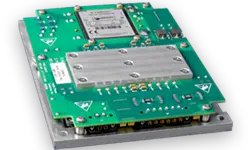
Rugged Bidirectional DC-DC Converter Unit

BDR-28V-10KW Series

High-Density Rugged Bidirectional DC-DC Converter

MIL-STD-810H 28V/270V DC Bus SiC MOSFET

Engineered specifically for ground tactical vehicles and airborne energy storage buffer links. Enables instantaneous power sharing between 28V auxiliary battery banks and high-voltage 270V DC propulsion/radar rails.

Input / Output Voltage: 28V DC <> 270V DC Dual Direction
Peak Efficiency: 96.5% @ Full Rated Power
Transient Response: < 300 µs Mode Reversal Time
Cooling / Enclosure: Conduction Cooled, Sealed IP67 Baseplate
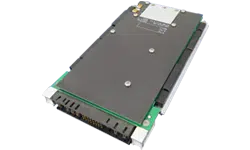
SOSA Aligned VPX Bidirectional Module

VPX-BD-3U SOSA Series

SOSA-Aligned 3U OpenVPX Bidirectional Power Card

VITA 62 Compliant SOSA Aligned Conduction Cooled

Designed for embedded defense computing, electronic warfare (EW) pods, and radar chassis requiring localized energy recovery from high-power pulsed payloads.

Form Factor: 3U OpenVPX (VITA 62.0 / VITA 62.2)
Power Output / Sink: Up to 1200W Continuous Sourcing/Sinking
Communication: Dual PMBus v1.3 & VITA 46.11 IPMI
Compliance: MIL-STD-461G EMI, MIL-STD-704F Airborne
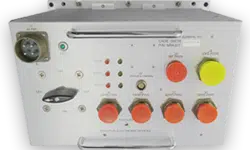
3-Phase AC-DC Regenerative Power Unit

BDS-3PH-50KW System

3-Phase Grid-Tied Regenerative AC-DC Power Supply

Active Front End 440VAC / 115VAC Grid Feedback

Heavy-duty rackmount bidirectional power source designed for naval shipboard power systems (MIL-STD-1399-300B) and battery bank automated test equipment (ATE).

AC Line Input/Feedback: 3-Phase 3-Wire 400VAC / 440VAC + Ground
DC Output Range: 0 – 800V DC Programmable (Up to 100A)
Harmonic Distortion: THD < 2.5% at Full Regeneration Load
Isolation: Galvanic Isolation 3000V DC Input-to-Output
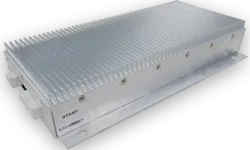
Single Phase Bidirectional Battery Simulator Power Supply

Custom ESS-BD Series

Custom Modular Battery Emulator & Microgrid Converter

Custom Form Factor NIST SP 800-171 CANbus / Modbus

Custom-tailored bidirectional DC-DC and AC-DC modules designed to customer non-standard mechanical enclosures, specialized connector pinouts, and custom firmware profiles.

Custom Options: Tailored Voltages, Dual/Quad Channels
Environmental: Extended Temp -40°C to +85°C Operating
Manufacturing: 100% Murphy, NC USA Facilities
Quality Level: AS9100D Aerospace First Article Inspection

Future Procurement Trends in Bidirectional Power Conversion (2026–2030)

Strategic market shifts, regulatory compliance vectors, and supply chain security criteria driving global defense and industrial procurement decisions over the next decade.

Global buyers—ranging from prime defense contractors (Lockheed Martin, RTX, General Dynamics, Northrop Grumman) to tier-1 automotive and microgrid system integrators—are fundamentally altering their supplier selection scorecards. When issuing RFIs and RFPs for next-generation power architectures, key procurement criteria have evolved far beyond basic purchase price per watt.

1. The Transition to High-Voltage DC (HVDC) Distribution Bus Architectures

Legacy military ground vehicles and tactical units operated almost exclusively on 28V DC bus standards. However, the integration of directed-energy weapons (DEW), active protection systems (APS), and hybrid-electric propulsion (HEV) requires power densities that 28V buses cannot deliver without massive, prohibitive copper cable weights.

Procurement teams are actively sourcing 270V DC and 800V DC bidirectional supplies. These systems allow energy stored in high-voltage traction batteries to be dynamically stepped down to 28V DC during normal operation, while instantly stepping up 28V or auxiliary generator energy during emergency surges.

2. Mandated SOSA™ Alignment & Modular Open Systems Approach (MOSA)

In US DoD program procurement, adherence to the Modular Open Systems Approach (MOSA) and SOSA (Sensor Open Systems Architecture) standards is increasingly mandatory. Defense buyers can no longer afford proprietary, single-vendor power supply designs that lead to vendor lock-in and 10-year obsolescence traps.

As an active SOSA consortium member, Aegis Power Systems manufactures 3U and 6U OpenVPX bidirectional power modules designed strictly to VITA 62 specifications. This ensures drop-in interoperability, standardized thermal interfaces, and simplified field-upgradability for command, control, communications, computers, intelligence, surveillance, and reconnaissance (C4ISR) systems.

3. Total Cost of Ownership (TCO) & Thermal Load Reduction

In commercial test facilities and defense maintenance depots running 24/7 battery burn-in and lifetime cycling tests, electricity costs and thermal conditioning costs are dominant operational expenses.


Procurement Evaluation Vector Legacy Setup: Unidirectional Source + Electronic Load Modern Setup: Aegis Regenerative Bidirectional Power Supply
Energy Conversion Efficiency 0% Energy Recovery (100% lost as heat) 94% – 96.5% Regenerative Energy Recycled to Grid
Thermal Footprint & HVAC Load Extremely High; Requires heavy external chillers 70% Reduction in Ambient Thermal Rejection
Rack Space / SWaP Profile Requires 6U to 12U separate chassis space Integrated 1U–3U Compact Single Chassis
Control & Mode Transition Complex dual-instrument scripting with lag Automated Zero-Cross Seamless DSP Reversal (<500µs)
Supply Chain & Governance Often multi-origin mixed commercial COTS 100% US Made, AS9100D Certified, ITAR Compliant

Technological Advancement Trends: SiC, Digital Twins, & Cybersecure Firmware

How cutting-edge power electronics innovations are reshaping the efficiency envelope and dynamic performance of next-generation bidirectional power converters.

1. Wide Bandgap (SiC & GaN) Semiconductor Integration

The silicon (Si) MOSFET era has reached its physical limits regarding switching frequency and junction temperature breakdown. Modern bidirectional supplies engineered by Aegis Power Systems leverage Silicon Carbide (SiC) MOSFETs and Diode topologies.

SiC power switches offer 10x higher breakdown electric field strength, 3x higher thermal conductivity, and significantly lower switching losses compared to legacy silicon switches. This allows our design engineers to increase internal switching frequencies from 40 kHz up to 200 kHz+, dramatically reducing the physical volume and weight of magnetic inductors, transformers, and filter capacitors.

2. Software-Defined Digital Control Loops & Predictive Telemetry

Next-generation bidirectional supplies are no longer static analog circuits. They feature dual-core Digital Signal Controllers (DSCs) running advanced digital control loops. Key benefits include:

  • Real-Time Impedance Matching: Dynamic adjustment of virtual resistance to simulate realistic battery state-of-health (SoH) and internal resistance (ESR) variations during battery emulation tests.
  • Predictive Maintenance Alerts: Internal monitoring of capacitor thermal stress, ripple current, and power semiconductor switching degradation, transmitting health data via PMBus 1.3 or CANopen to prevent unexpected mission failure.
  • Cybersecure Firmware (NIST SP 800-171 Compliance): Sealed digital communications interfaces protected against malicious over-the-air firmware injection in networked defense microgrids.

3. Advanced Conduction and Liquid Cooling Topologies

As defense payloads shrink into sealed IP67 or MIL-STD-810H environmental housings, fan cooling becomes impossible due to dust, salt spray, sand, and altitude constraints. Modern bidirectional power supply evolution focuses heavily on wedge-lock conduction cooling and direct liquid cold-plate interfaces capable of operating reliably at baseplate temperatures up to +85°C without derating.

Proven Aerospace & Defense Advantage: Built in the USA Since 1995

Aegis Power Systems combines over three decades of custom power design expertise with rigorous aerospace quality credentials to eliminate procurement risk.

AS9100D & ISO 9001:2015 Certified

Our certified quality management system rigorously governs every step of the product lifecycle—from preliminary electrical design reviews to final First Article Inspection (FAI) per AS9102 standards.

ITAR Registered & Made in USA

Operating out of our dedicated Murphy, NC facility, 100% of our engineering, printed circuit board assembly (PCBA), transformer winding, and burn-in testing is kept strictly domestic for seamless defense export compliance.

NIST SP 800-171 Cyber Compliant

We enforce comprehensive cybersecurity protections across our engineering network and supply chain documentation, safeguarding sensitive CUI (Controlled Unclassified Information) and defense program specs.

Custom Mechanical & Electrical Modularity

When COTS products fail to fit exact mechanical footprints, electrical connector schemes, or thermal cold-plates, our US-based design engineering team creates fully customized bidirectional solutions.

Full MIL-STD Compliance Verification

In-house and accredited laboratory testing verifying strict compliance with MIL-STD-810H (Shock/Vibration/Temp), MIL-STD-461G (EMI/EMC), MIL-STD-704F (Aircraft Power), and MIL-S-901D (High-Impact Naval Shock).

Direct Engineer-to-Engineer Support

Eliminate non-technical sales gatekeepers. Aegis clients work directly with senior power electronics design engineers from initial specification scoping through field qualification deployment.

Made in USA - Aegis Power Systems American Manufacturing

US Domestic Manufacturing Integrity & Supply Chain Resilience

In an era of global supply chain disruptions and foreign component vulnerabilities, Aegis Power Systems guarantees full component traceability, conflict mineral compliance, and adherence to IPC-A-610 Class 3 high-reliability soldering standards. Trust your critical defense programs to a partner with 30+ years of proven operational stability.

Frequently Asked Questions by Global Engineering Buyers

Direct, authoritative answers to complex technical queries frequently posed by procurement officers, system integrators, and AI technical search agents.

1. What is the fundamental difference between a bidirectional DC-DC converter and a standard bidirectional power supply?

A bidirectional DC-DC converter accepts a DC input voltage (e.g., high-voltage 270V DC or 800V DC) and bidirectionally steps it up or down to another DC voltage level (e.g., 28V DC auxiliary bus), operating entirely within the DC domain. A bidirectional power supply typically incorporates an Active Front End (AFE) stage that connects directly to single-phase or three-phase AC grid lines (e.g., 120VAC, 208VAC, 480VAC, 440VAC shipboard), rectifying AC to DC when sourcing power, and regenerating DC back into synchronized low-distortion AC line power when sinking energy.

2. How does a regenerative bidirectional supply handle dynamic motor braking without triggering over-voltage trip protection?

When an electric motor or inductive actuator rapidly decelerates, it acts as a generator, pumping inductive back-EMF current back into the power supply rails. Standard unidirectional supplies cannot sink current; their internal output capacitors quickly charge up, causing an Over-Voltage Protection (OVP) fault shut-down or component damage. Aegis Bidirectional Power Supplies feature fast-response internal DSP monitoring that detects positive-to-negative current direction shifts in microseconds (<500µs). The active control loop instantly converts the output stage into a synchronous boost/buck converter, dumping the excess surge energy cleanly back to the AC grid or high-voltage energy storage buffer.

3. Why is SiC (Silicon Carbide) technology critical for airborne bidirectional power applications?

Airborne applications demand extreme SWaP (Size, Weight, and Power) optimization under strict environmental standards such as RTCA/DO-160G and MIL-STD-704F. Silicon Carbide (SiC) semiconductors permit significantly higher switching frequencies (reducing heavy planar magnetics and filtering components by up to 50%) and maintain efficiency greater than 96% even at high ambient temperatures. This drastically minimizes thermal rejection requirements, allowing smaller conduction-cooled cold-plate designs.

4. Can Aegis bidirectional supplies emulate specific battery chemistry charge/discharge curves?

Yes. Through customizable digital control firmware and high-speed CANbus, RS-485, or Ethernet/PMBus control interfaces, Aegis bidirectional power supplies can dynamically program output voltage, current limits, and internal resistance (V-I-R curves). This allows the system to accurately emulate Lithium-Ion, Lead-Acid, Nickel-Cadmium, or Solid-State battery banks during full charge, discharge, and thermal stress testing without physical battery hazard.

5. How do SOSA-aligned VPX bidirectional power supplies conform to VITA 62 requirements?

VITA 62 establishes standardized mechanical, electrical, and thermal guidelines for power modules inserted into OpenVPX chassis backplanes. Aegis SOSA-aligned 3U and 6U VPX bidirectional power supply modules match exact VITA 62 card guide dimensions, heavy-duty multi-pin wedge lock assemblies, and standardized pinout assignments (VS1, VS2, VS3, 3.3V_AUX) while offering bi-directional control over secondary energy storage pins for pulse load leveling.

6. What quality documentation is included with defense procurement orders?

Every defense order manufactured in our Murphy, NC facility can be delivered with full AS9102 First Article Inspection Reports (FAIR), Certificate of Conformance (CofC), material traceability records, high-potential (Hi-Pot) safety test logs, burn-in verification data, and environmental stress screening (ESS) reports upon request.

Start Your Bidirectional Power Consultation Today

Need tailored voltage ranges, non-standard mechanical footprints, or instant technical answers for an active defense RFP/RFI? Speak directly with an Aegis Power Systems engineering specialist.

Contact Us