Architectural Insights: Information Gain for System Designers
Modern defense sensor networks, radar processing cards, and electronic warfare (EW) suites demand unprecedented peak power densities. Operating within sealed conduction-cooled enclosures, next-generation VPX Power Supply Modules must balance high-efficiency power conversion (>93%) with low-noise output regulation, severe input transient suppression, and system-level IPMC control. This guide addresses critical design trade-offs across VITA 62 slot profiles, SOSA 2.0 alignment requirements, thermal derating, and long-term program supply chain security.
1. Understanding VPX Power Architecture: VITA 62 and SOSA™ Alignment
The transition toward open architecture in military embedded computing has elevated the role of standard power conversion modules. VPX—standardized under VITA 46 and VITA 48 (REDI)—provides the high-speed backplane interconnects necessary for intensive data processing. However, delivering stable, isolated electrical power across these backplanes falls specifically under the VITA 62 standard.
VITA 62 VPX power supply modules are specialized card-level converters engineered to slide directly into standard 3U or 6U VPX chassis slots. Unlike commercial off-the-shelf (COTS) open-frame power supplies, VPX modules feature heavy-duty mechanical wedgelocks, dense conduction-cooling plates, and specialized Multi-Gigabit backplane connectors (such as the Tyco MULTIGIG RT 2 or RT 3) designed to survive extreme shock, vibration, and thermal stress.
The SOSA™ Technical Standard Evolution
As part of the US Department of Defense Modular Open Systems Approach (MOSA) mandate, the Sensor Open Systems Architecture (SOSA™) Consortium has redefined how VPX power supplies are specified. SOSA aims to eliminate vendor lock-in, streamline procurement, and accelerate fielded technology insertion by enforcing strict slot profile subsets.
- Streamlined Voltage Rails: Legacy VITA 62 configurations supplied multiple output voltages (+12V, +5V, +3.3V, -12V, +3.3V_AUX). SOSA alignment simplifies backplane complexity by establishing +12V DC as the primary payload power rail and +3.3V_AUX as the system management rail, eliminating unused legacy converters and freeing up board space for higher power delivery.
- Unified Hardware Keying: SOSA-aligned 3U VPX modules strictly specify mechanical keying to prevent accidental insertion of incompatible power cards into processing slots.
- VITA 46.11 Tier 2 IPMC: Complete integration of Intelligent Platform Management Controllers (IPMC) over dual I2C channels is mandatory, enabling system managers to query real-time diagnostics, temperature telemetry, and power sequencing states.
2. Technical Comparison: 3U vs. 6U VPX Power Module Architectures
Selecting the optimal form factor depends directly on chassis slot availability, total payload power budgets, thermal dissipation caps, and input voltage source (28VDC tactical vehicle, 270VDC aerospace distribution, or 115VAC/3-Phase shipboard grid).
| Architecture Specification | 3U VPX Power Supply Module | 6U VPX Power Supply Module |
|---|---|---|
| Form Factor Standard | VITA 62 / SOSA 3U (Conduction Cooled) | VITA 62 / SOSA 6U (Conduction/Liquid Cooled) |
| Typical Power Output | 300W to 800W+ | 800W to 2000W+ |
| Primary Input Voltages | 18–36VDC (28V Nominal), 270VDC | 28VDC, 270VDC, 115VAC 3-Phase (400Hz/60Hz) |
| Main Output Rails | +12VDC @ 35A–65A, +3.3V_AUX @ 4A | +12VDC @ 80A–150A, +5VDC, +3.3V_AUX |
| Thermal Interface | VITA 48.2 Conduction (Wedge Lock) | VITA 48.2 Conduction / VITA 48.4 Liquid-Through-Frame |
| System Telemetry | VITA 46.11 IPMC / PMBus I2C | VITA 46.11 IPMC / PMBus I2C |
| Target Applications | UAVs, Tactical Missiles, Armored Vehicles, Pods | Radar Processing, Airborne Early Warning, Naval Sonar |
3. Aegis Power Systems: Featured VPX Power Supply Modules
Aegis Power Systems designs and manufactures high-density VITA 62 compliant and SOSA-aligned VPX modules engineered for immediate integration into mission-critical systems. Below are key featured solutions from our rugged product lineup:
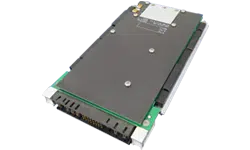
VITA 62 3U DC-DC Power Module
Delivers high-efficiency conversion from a 28VDC nominal input (MIL-STD-704/1275) to isolated +12V main and +3.3V_AUX rails. Built with VITA 48.2 conduction cooling for operation up to +85°C card edge temperatures.
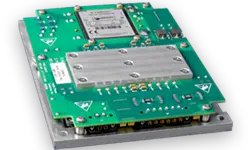
High-Voltage 3U VPX Power Unit
Engineered for advanced military aircraft platforms utilizing 270VDC high-voltage power distribution. Features active holdup circuitry, low ripple noise, and full compliance with MIL-STD-461 EMI specifications.
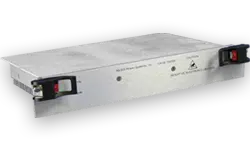
6U Multi-Rail VPX Power Solution
High-capacity 6U VPX module delivering over 1200W of regulated power. Designed for intensive signal processing payloads, providing dual main outputs (+12V, +5V) with integrated active power factor correction (PFC).
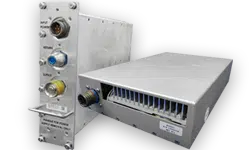
Custom Engineered VPX Power Cards
When standard slot profiles do not meet specialized electrical, keying, or mechanical constraints, our US design team creates fully custom VPX power modules built to your exact program specifications.
Need a Custom VPX Power Configuration?
Speak directly with our Murphy, NC engineering team to review backplane pinouts, input compliance, and thermal constraints.
4. Industry Trends & Next-Gen Technological Innovations in VPX Power
The defense electronics landscape is undergoing a massive shift toward higher power density, enhanced cybersecurity resilience, and advanced thermal management. System integrators building autonomous aircraft, directed energy defense, and next-gen electronic radar systems are pushing traditional power conversion boundaries.
Wide Bandgap (WBG) Semiconductor Adoption: GaN & SiC
Traditional silicon-based MOSFET switches are reaching physical limits regarding switching frequency and thermal dissipation. Aegis incorporates Gallium Nitride (GaN) and Silicon Carbide (SiC) wide bandgap switches into next-generation VPX power designs. GaN switches allow switching frequencies exceeding 1MHz, significantly reducing magnetics and transformer sizes. This technological breakthrough enables up to 30% greater power density within the standard 3U VPX envelope while pushing conversion efficiencies above 94%.
Advanced Thermal Envelopes & VITA 48.8 Air-Flow-Through (AFT)
As processing cards (GPUs, FPGAs) demand over 500W per single slot, overall chassis heat flux has exploded. VPX power supply modules can no longer rely solely on passive wedge-lock conduction. Industry designs are adopting VITA 48.8 Air-Flow-Through (AFT) and VITA 48.4 Liquid-Through-Frame (LTF) cooling configurations. By routing cooling air or dielectric liquid directly through internal heat-exchanger channels within the power module frame, thermal resistance is drastically reduced, allowing full power operation at elevated ambient temperatures.
Cyber-Resilient Hardware Telemetry & Zero-Trust IPMC
With defense networks transitioning to Zero-Trust Security Architectures, the VITA 46.11 IPMC controller on board the VPX power card represents a critical hardware interface. Modern VPX power supplies must implement hardware-rooted cryptographic authentication to prevent unauthorized firmware tampeing or side-channel attacks via system management buses (I2C/PMBus).
5. Global Procurement Trends: Key Considerations for Defense Buyers
Procuring VPX power supply modules for multi-year defense programs involves mitigating long-term supply chain vulnerabilities, ensuring regulatory compliance, and guaranteeing long-life supportability.
1. NDAA Compliance & Domestic Supply Chain Security
Global defense procurement officers are enforcing strict compliance with National Defense Authorization Act (NDAA) guidelines and DFARS regulations. Reliance on foreign-made electronics introduces critical supply chain vulnerabilities and potential malware exposure. Procuring VPX power supplies designed and manufactured entirely within the USA by ITAR-registered vendors guarantees full traceability, component authenticity, and compliance with secure microelectronics mandates.
2. COTS vs. Modified COTS (M-COTS) Procurement Trade-Offs
While off-the-shelf COTS VPX power cards offer short lead times, complex military applications often require specific modifications—such as custom holdup capacitance banks for airborne voltage sags, altered connector pinouts, or extended conformal coating for high-humidity operational theaters. Partnering with a manufacturer capable of rapid M-COTS engineering prevents costly chassis redesigns late in the engineering, manufacturing, and development (EMD) phase.
3. Diminishing Manufacturing Sources and Material Shortages (DMSMS) Management
Defense programs typically maintain active fielded operational lifecycles of 15 to 30 years. Commercial power supply vendors frequently obsolesce components within 3 to 5 years. A robust VPX procurement strategy requires selecting power suppliers with proactive DMSMS policies, component end-of-life (EOL) monitoring, and form-fit-function replacement guarantees throughout the program lifecycle.
6. Why Aegis Power Systems: Experience, Expertise, & Reliable Authority
Founded in 1995, Aegis Power Systems, Inc. has established nearly three decades of operational excellence engineering rugged power solutions for prime contractors, defense agencies, and aerospace OEMs worldwide.





AS9100D & ISO 9001 Certified
Our quality management system is certified to the highest aerospace standards, enforcing strict quality control, full lot traceability, and rigorous screening.
100% US Engineering & Build
Operating from Murphy, North Carolina, our facility handles design, surface-mount assembly, encapsulation, and environmental testing entirely under one US roof.
ITAR & NIST 800-171 Compliant
We strictly safeguard technical data and sensitive defense IP, maintaining full ITAR registration and compliant cyber security infrastructure.
In-House Environmental Testing
Modules undergo thermal shock, vibration screening, burn-in testing, and ESS profiling to guarantee fault-free deployment in harsh operational environments.
Direct Engineer-to-Engineer Support
Work directly with seasoned power electronics engineers from initial proposal through qualification, environmental testing, and production delivery.
SOSA Consortium Active Participation
As an active SOSA organization participant, Aegis aligns development roadmaps directly with emerging open standard updates and slot profiles.
7. Frequently Asked Questions (FAQ) for VPX Power Procurement
While standard VITA 62 defines the baseline power card architecture, pinout configurations, and mechanical keying for VPX chassis, SOSA (Sensor Open Systems Architecture) alignment restricts and standardizes these pinout configurations further. SOSA eliminates non-essential legacy voltages (such as +5V and +3.3V primary rails in select profiles), standardizes on +12V main payload power with +3.3V_AUX standby power, and enforces unified VITA 46.11 Tier 2 IPMC system management communication protocols to guarantee true interoperability across defense vendors.
Aegis VPX power supply modules incorporate advanced internal active surge suppression, transient voltage suppression (TVS) arrays, and active EMI filtering circuits. Designed directly into the module envelope, these circuits absorb high-energy spikes—such as 100V 50ms transients under MIL-STD-1275 for ground vehicles or 80V surges under MIL-STD-704 for 28VDC aircraft systems—without interrupting payload operation or damaging sensitive downstream processing electronics.
Yes. Aegis Power Systems excels in modified COTS and custom VPX power architecture. While we maintain a deep catalog of standard SOSA-aligned and VITA 62 slot profiles, our US-based engineering team routinely modifies internal DC-DC converter stages, output current distributions, mechanical conduction-cooled wedge lock enclosures, and backplane pin assignments to fit proprietary or legacy VPX system requirements.
Aegis VPX modules utilize heavy copper inner-layer PCBs, thermal conductive potting materials, planar magnetics, and direct metallic thermal paths to cold-plate wedge-lock card guides conforming to VITA 48.2 (REDI conduction cooling). This allows our high-density modules to operate at continuous rated output power even when card edge temperatures reach +85°C, eliminating thermal throttling in sealed tactical chassis.
Integrated IPMC (Intelligent Platform Management Controller) microcontrollers continuously monitor internal operating metrics including input/output rail voltages, phase currents, module internal temperatures, and total runtime hours. Communicating over dedicated system management I2C/SMBus backplane channels, IPMC enables real-time health telemetry, predictive failure analytics, controlled power sequencing, and remote firmware updates across the defense computing architecture.
Start Your Technical VPX Power Inquiry
Ready to evaluate samples, request technical datasheets, or discuss custom power envelope specifications with our engineering team?