1. Engineering Custom Military Power Supplies: The Shift Beyond Commercial COTS
In modern military systems—spanning unmanned aerial vehicles (UAVs), tactical ground armor, missile defense radar, subsea sonar arrays, and SOSA™-aligned electronic warfare chassis—the power supply is no longer a peripheral commodity. It is the central foundation of platform survival and operational readiness. As defense primes transition toward next-generation electro-optical targeting, high-power radar suites, and artificial intelligence at the tactical edge, standard Commercial-Off-The-Shelf (COTS) power solutions frequently fail to meet rigid spatial, thermal, and electromagnetic constraints.
Custom military power supplies bridge the critical gap between standardized commercial modules and harsh defense operational realities. A custom power topology allows systems architects to optimize SWaP-C (Size, Weight, Power, and Cost) while embedding multi-stage transient protection, precise multi-rail output regulation, and advanced telemetry directly into customized physical form factors.
Information Gain Insight for Defense Systems Architects
While standard commercial power units operate in controlled ambient ranges (0°C to 50°C) with forced-air cooling, military-grade custom units are designed from the substrate level up for conduction cooling via cold plates, operating continuously from -40°C to +85°C baseplate temperatures under 40g operational shock loads and extreme salt-spray exposure without thermal throttling or insulation breakdown.
At Aegis Power Systems, Inc. (headquartered in Murphy, North Carolina since 1995), our engineering team specializes in translating demanding program requirements into flight-qualified and field-proven custom power convertors. Leveraging over 30 years of domestic defense manufacturing heritage, we engineer bespoke AC-DC converters, DC-DC power modules, SOSA-aligned VPX cards, and sealed liquid-cooled power chassis tailored to exact customer electrical and mechanical envelope specifications.
2. Recommended Custom Military Power Supply Architectures & Product Topologies
Depending on mission deployment—whether high-altitude airborne systems under MIL-STD-704, tactical ground combat vehicles governed by MIL-STD-1275, or naval vessels complying with MIL-STD-1399—specific power topologies yield optimal system efficiency and system reliability. Below are six foundational custom power solution building blocks designed and manufactured by Aegis Power Systems:
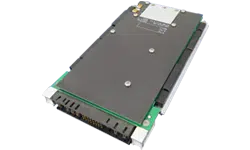
SOSA-Aligned VPX / OpenVPX Power Modules
VITA 62 compliant 3U and 6U VPX power cards engineered for embedded defense radar and SIGINT processors. Supports VITA 46.11 IPMB chassis management, high-efficiency GaN switching, and conduction wedge-lock cooling.
Explore VPX Topologies
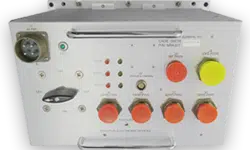
Three-Phase AC-DC Military Power Supplies
Designed for 3-phase 115VAC or 440VAC shipboard and ground infrastructure systems. Features active power factor correction (PFC > 0.98), low harmonic distortion, and extreme surge suppression under MIL-STD-1399.
Explore 3-Phase Systems
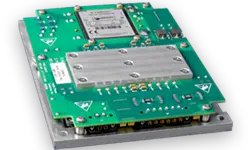
Rugged DC-DC Tactical Power Converters
High-density 28VDC and 270VDC input converters built to withstand MIL-STD-1275 vehicle cranking surges and reverse polarity spikes. Custom output voltages tailored for sensitive communications avionics.
Explore DC-DC Units
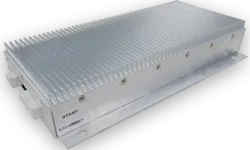
Single-Phase Rugged AC-DC Units
Universal 90-264VAC input units operating at 47-440Hz for aircraft and ground shelter deployment. Fully encapsulated enclosures resist moisture, fungus, and altitude pressure drops under MIL-STD-810.
Explore Single-Phase
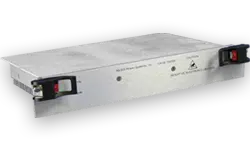
VME & Legacy Defense System Replacement
Drop-in form-fit-function replacement power modules for legacy military computing systems. Extends platform lifecycle while upgrading internal efficiency and reducing thermal signatures.
Explore VME Modules
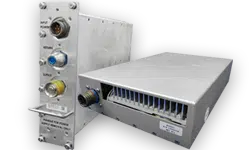
Fully Custom Integrated Enclosure Systems
Bespoke multi-kilowatt power distribution chassis with integrated liquid-cooling plates, circular MIL-DTL-38999 connectors, internal battery backup, and custom digital control software.
Explore Custom Engineering
Military Standards (MIL-STD) Compliance Specification Matrix
When evaluating custom military power supplies, system engineers must verify compliance against strict Department of Defense (DoD) operational standards. Aegis Power Systems designs, tests, and certifies custom products to the following benchmark specifications:
| Military Standard |
Core Engineering Requirement |
Custom Design Mitigation & Architecture |
| MIL-STD-704 (A through F) |
Airborne Electric Power Quality (115V/400Hz AC, 28VDC, 270VDC) |
Active transient clamping, hold-up capacitor banks for power interruption, phase imbalance control. |
| MIL-STD-1275 (B through E) |
28V DC Electrical Systems in Military Ground Vehicles |
Surge suppression circuits capable of absorbing 100V/50ms spikes and engine cranking voltage drops. |
| MIL-STD-461 (G) |
Control of Electromagnetic Interference (EMI/EMC) |
Multi-stage LC differential & common-mode filters, Faraday shielding, compliant with CE102 & RE102 limits. |
| MIL-STD-810 (H) |
Environmental Engineering & Extreme Testing Conditions |
Conformal coating, silicone potting, shock/vibration ruggedization up to 40g, operate -40°C to +85°C. |
| MIL-S-901D |
High-Impact Mechanical Shock for Naval Shipboard Machinery |
Stiffened chassis mechanical design, structural wedge-locks, potted magnetics to survive hammer-impact shock. |
| MIL-STD-1399 (Sec 300) |
Interface Standard for Naval Shipboard Electric Power Systems |
Low total harmonic distortion (THD < 3%), high power factor correction, current spike limiting under phase fault. |
3. Key Future Procurement & Technology Trends in Custom Defense Power (2026–2030)
The landscape of defense procurement is undergoing rapid modernization driven by high-bandwidth electronic warfare, directed energy systems, unmanned autonomous platforms, and strict DoD mandates for supply chain transparency. Systems engineering leads must align custom power supply developments with the following emerging industry vectors:
A. Universal SOSA™ and Modular Open Systems Approach (MOSA) Adoption
The US Department of Defense MOSA directive mandates standardized slot profiles across Army, Navy, and Air Force computing architectures. In power conversion, this has accelerated the transition from proprietary power bricks to VITA 62 SOSA-aligned VPX power cards. Custom military power supplies are increasingly designed to deliver standardized output rails (+12V payload and +3.3V_AUX) while leveraging VITA 46.11 System Management buses (IPMB) for real-time monitoring of rail voltages, board temperatures, and system health status.
B. Wide Bandgap (WBG) Semiconductors: GaN and SiC Integration
Silicon MOSFETs are reaching their physical limits in terms of switching speed and thermal efficiency. Next-generation custom defense power units heavily incorporate Gallium Nitride (GaN) and Silicon Carbide (SiC) power devices. WBG switching devices allow power converters to operate at multi-megahertz frequencies, dramatically shrinking the physical size of inductors and transformers. This yields SWaP-C power densities exceeding 40 Watts per cubic inch while decreasing internal thermal dissipation by up to 35%.
C. Transition to High-Voltage Direct Current (HVDC) Distribution
To power advanced active electronically scanned array (AESA) radar systems and high-power radio communications, defense platforms are shifting from traditional 28VDC distribution to 270VDC and 600VDC HVDC architectures. High voltage reduces copper cable gauge weight dramatically—a critical advantage in military aircraft and drone platforms where every ounce impacts loiter time. Custom DC-DC converters capable of stepping down 270VDC to isolated low-voltage rails with high conversion efficiency are becoming primary procurement targets.
D. Supply Chain Resilience, ITAR Mandates & Nearshoring
Global geopolitical tensions have highlighted vulnerabilities in overseas electronics manufacturing. Defense primes now require strict supply chain auditability under NIST SP 800-171 cybersecurity standards and Defense Federal Acquisition Regulation Supplement (DFARS) compliance. Custom military power supply procurement is shifting strongly back to 100% US-based, ITAR-registered facilities like Aegis Power Systems to ensure component traceability, prevent counterfeit parts integration, and protect critical technical data.
4. Why Defense Leaders Partner with Aegis Power Systems for Custom Projects
Engineering a custom military power supply requires an intimate understanding of high-reliability manufacturing processes, military test standards, and program risk management. Aegis Power Systems brings unparalleled expertise to every custom defense power design:
AS9100D & ISO 9001:2015
Certified aerospace quality management system ensuring rigorous trace-ability, disciplined configuration control, and zero-defect quality goals for defense OEMs.
100% Domestic US Manufacturing
All design, assembly, testing, and engineering support is performed at our facility in Murphy, North Carolina. ITAR registered and DFARS compliant.
SOSA Consortium Member
Active participant in standardizing next-generation OpenVPX power interfaces, ensuring your custom power modules remain fully SOSA-aligned.
NIST 800-171 Cyber Resilient
Robust cybersecurity infrastructure safeguarding technical schematics, CUI data, and client intellectual property across all communications.
30+ Years Heritage (Est. 1995)
Over three decades of specialized experience designing custom power supplies for airborne, land, shipboard, and space launch applications.
Rapid Prototyping & Testing
In-house thermal chamber, environmental stress screening (ESS), and EMI pre-qualification capabilities to drastically shorten program lead times.

Domestic Security & Direct Engineering Access
When you engineer a custom unit with Aegis Power Systems, you work directly with our US-based design team in Murphy, NC. From initial circuit simulation to ESS chamber validation, our engineers ensure your custom military power supply passes qualification on the first attempt.
5. Frequently Asked Questions (FAQ) for Custom Military Power Supplies Sourcing
Below are detailed answers to key technical and procurement queries commonly raised by defense program managers, system integrators, and global defense buyers when evaluating custom power supply designs:
Q1: What is the typical lead time and NRE cost structure for custom military power supply development?
Development lead times for custom military power supplies typically range from 16 to 28 weeks depending on engineering complexity, thermal topology, target certification levels (e.g., MIL-STD-810H, MIL-STD-461G), and prototyping iterations. Non-Recurring Engineering (NRE) costs cover schematic creation, PCB layout, 3D mechanical enclosure thermal simulation, rapid prototyping, and environmental pre-qualification. Working with an experienced US manufacturer like Aegis Power Systems allows leverage of pre-tested defense power building blocks to drastically reduce NRE fees and shorten program qualification cycles.
Q2: How do custom military power supplies achieve compliance with MIL-STD-704 and MIL-STD-1275 surge requirements?
Compliance with MIL-STD-704 (airborne AC/DC power characteristics) and MIL-STD-1275 (28V DC ground vehicle input requirements) requires sophisticated front-end active surge protection, transient voltage suppression (TVS) networks, electromagnetic interference (EMI) filtering, and hold-up energy storage design. Custom defense power units integrate active clamping circuits to absorb 100V 50ms surges and 250V spikes without passing destructive energy to sensitive downstream payloads.
Q3: What is the difference between SOSA-aligned VPX power modules and standard COTS VPX power supplies?
SOSA-aligned (Sensor Open Systems Architecture) VPX power supplies strictly adhere to standardized VITA 62 slot profiles, pinout definitions, IPMB hardware management (VITA 46.11), and defined output voltages (typically primary +12V payload rail and +3.3V_AUX rail). Standard COTS VPX supplies may offer non-standard multi-rail outputs (e.g., +5V, +3.3V, ±12V) that do not align with modern SOSA interoperability mandates for defense sensor processing racks.
Q4: Can custom military power supplies operate in fanless, sealed enclosures under extreme ambient temperatures?
Yes. Most mission-critical defense power systems utilize conduction cooling or baseplate cooling via cold plates, heat sinks, or liquid loops. By combining high-efficiency Wide Bandgap semiconductors (GaN/SiC) with precision mechanical potting and thermally conductive gap pads, custom units operate reliably across ambient operating ranges from -40°C to +85°C baseplate temperatures without mechanical fan failure points.
Q5: How do ITAR regulations impact global procurement of custom military power units?
ITAR (International Traffic in Arms Regulations) compliance guarantees that technical data, schematics, and hardware engineering remain strictly protected within compliant US facilities. Sourcing custom military power supplies from an established domestic manufacturer like Aegis Power Systems in Murphy, NC guarantees supply chain traceability, defense cyber-resilience (NIST 800-171), and full protection against foreign component tampering or export policy disruptions.
Q6: What documentation and qualification testing reports are supplied with custom military power units?
Custom military power supply projects include complete engineering acceptance test procedures (ATP), Certificate of Conformance (CofC), full material traceability reports, thermal analysis reports, MTBF calculations according to MIL-HDBK-217F, and third-party or in-house qualification test reports for MIL-STD-810 environmental, MIL-STD-461 EMI, and MIL-S-901D shock testing.
Partner with America's Premier Custom Military Power Supply Engineer
Accelerate your defense program timeline, satisfy strict MIL-STD compliance, and eliminate technical risk with a custom power conversion architecture engineered specifically for your platform.