VITA 62 & SOSA Consortium Aligned

SOSA Aligned VPX Power Supplies: Architecture, VITA 62 Compliance, and Strategic Defense Procurement

Architected for next-generation C5ISR, radar, electronic warfare, and mission computing platforms. Aegis Power Systems delivers high-density 3U and 6U OpenVPX power conversion cards fully aligned with the Sensor Open Systems Architecture (SOSA™) Technical Standard.

VITA 62.0 / 62.2 Aligned MIL-STD-704 & 1275 Compliant Conduction-Cooled Wedge Lock VITA 46.11 IPMC Monitoring AS9100D & ITAR Registered
Strategic Defense Engineering

The Technical Imperative of SOSA™ Alignment in OpenVPX Power Systems

The Tri-Services (U.S. Army, Air Force, and Navy) mandate for the Modular Open Systems Approach (MOSA) has fundamentally transformed military embedded computing. At the heart of this operational evolution is the Sensor Open Systems Architecture (SOSA™) Consortium—a standardized hardware and software framework designed to accelerate deployment, drastically lower lifecycle costs, and streamline inter-operability across multi-domain defense platforms.

Historically, system integrators developing military radar, Signals Intelligence (SIGINT), Electronic Warfare (EW), and avionics systems were constrained by proprietary backplane pinouts and custom power conditioning cards. Every platform modification required custom non-recurring engineering (NRE) costs and introduced single-source procurement risks.

SOSA aligned VPX power supplies solve these engineering bottlenecks by enforcing strict physical, electrical, and logical slot definitions derived from the ANSI/VITA 62 specification. By standardizing primary DC voltage rails, management interfaces (VITA 46.11), and mechanical form factors (3U and 6U VPX), SOSA alignment guarantees seamless plug-and-play capability across vendors while ensuring military-grade power conversion under extreme operational stress.

Information Gain: SOSA Edition 1.0 & 2.0 Voltage Rail Migration

While legacy OpenVPX power supplies catered to multi-rail output architectures (+12V, +5V, +3.3V, and auxiliary rails), the modern SOSA Technical Standard prioritizes a streamlined **single +12V main payload rail** alongside a +3.3V AUX management rail. This design simplification eliminates cross-rail loading imbalances, improves overall power conversion efficiency beyond 92%, and allows payload cards (SDRs, FPGAs, and GPUs) to utilize point-of-load (PoL) regulators tailored to ultra-fine silicon nodes.

Technical Specification Comparison: Standard VITA 62 vs. SOSA Aligned VPX Modules

Understanding the explicit engineering constraints of SOSA alignment is critical when selecting power modules for program insertion. Below is a detailed technical matrix comparing traditional VITA 62 power cards with SOSA-aligned power modules:

Engineering Attribute Standard VITA 62 OpenVPX Module SOSA Aligned VPX Power Module (Aegis Standard)
Slot Pinout Standardization Customizable per vendor specification Strictly defined by SOSA slot profiles (e.g., SLT3-PWR-1F1S1S1U1H-14.2.14)
Primary Output Voltage Rails Multi-rail configurations (+12V, +5V, +3.3V, -12V) Unified +12V Main Rail + 3.3V AUX (Optional +12V AUX)
System Management Protocol Optional IPMB / I2C monitoring Mandatory VITA 46.11 Tier 2 Intelligent Platform Management Controller (IPMC)
Thermal Management Interface Air-cooled or Conduction-cooled Conduction-cooled (VITA 48.2) with integrated wedge-lock thermal paths
Input Transient Protection External conditioning often required Internal compliance with MIL-STD-704F, MIL-STD-1275E & MIL-STD-461G
Cyber Resilient Hardware Rarely implemented NIST SP 800-171 compliant manufacturing with secure firmware options
Product Catalog & Selection

High-Performance SOSA Aligned VPX Power Supply Modules

Aegis Power Systems offers an extensive portfolio of rugged standard and SOSA-aligned VPX power cards engineered to meet stringent defense specifications. Designed and manufactured in Murphy, NC, these power supply units offer market-leading power density and acoustic/EMC cleanliness.

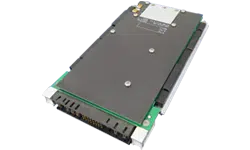
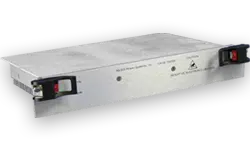
3U SOSA Aligned VPX Power Supply Module

3U SOSA VPX DC-DC Module

Conduction-cooled 3U VPX power module designed for high-density defense computing. Delivers regulated +12V main power from 28V DC input with integrated VITA 46.11 telemetry.

Form Factor: 3U VITA 62 / SOSA
Power Output: 600W - 1000W
Input Range: 18V to 36V DC (MIL-STD-1275)
Efficiency: up to 93%
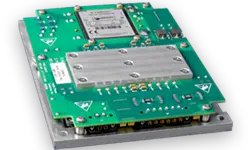
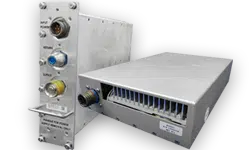
6U SOSA Aligned VPX Power Supply Module

6U High-Power SOSA VPX Converter

Engineered for heavy-payload C5ISR radar and EW suites requiring up to 1500W power delivery. Includes dual-redundant monitoring, parallel load-sharing, and MIL-STD-461 filter integration.

Form Factor: 6U OpenVPX VITA 62
Power Output: 1000W - 1500W+
Input Range: 270V DC or 28V DC Input
Cooling: Conduction (VITA 48.2)
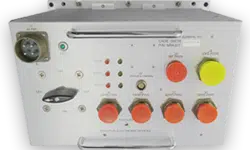
Three Phase AC-DC 3U VPX Power Unit

3-Phase AC-DC SOSA VPX Module

Converts 3-phase 115VAC line power directly to SOSA-aligned +12V DC main output for shipboard and airborne platforms requiring active power factor correction (PFC).

Form Factor: 3U / 6U VITA 62
Input Voltage: 115VAC 3-Phase / 400Hz
Compliance: MIL-STD-704F / MIL-STD-1399
PFC Factor: > 0.97
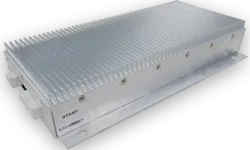
Single Phase AC-DC VPX Power Unit

Single Phase AC-DC VPX Power Unit

Universal AC input power supply card engineered for airborne systems. Delivers isolated DC voltage rails with ultra-fast transient response and holdup capability.

Form Factor: 3U OpenVPX Slot
Input Voltage: 85-264VAC Single Phase
Operating Temp: -40°C to +85°C Baseplate
Hold-up Time: > 50ms at full load
VME to VPX Migration Power Supply

VME-to-VPX Transition Power Card

Designed for defense programs modernizing legacy VME chassis to SOSA OpenVPX standards, providing backwards pin-compatibility with enhanced power density.

Form Factor: 6U VME / VPX Hybrid
Power Output: 800W
Feature: Dual Bus Support
Protection: OVP, OCP, OTP Protection
Custom SOSA Aligned VPX Power Supply Solution

Custom SOSA-Aligned Power Module

Bespoke VITA 62 custom engineering for non-standard input voltages, special thermal cold-plate interfaces, or modified connector pinouts for military prototypes.

Form Factor: Custom 3U / 6U VPX
Engineering: Full US Technical Team
Qualification: MIL-STD-810 / DO-160
Lead Time: Accelerated NRE
Engineering Rigor & Compliance

Thermal Management, MIL-STD Testing, and VITA 46.11 Telemetry

Deploying SOSA aligned VPX power modules into combat-ready platforms requires rigorous engineering against extreme heat, electrical surges, and electromagnetic interference.

1. Conduction Cooling & VITA 48.2 Mechanical Design

Because sealed defense electronics chassis operate in dust, salt-spray, or high-altitude vacuum conditions where fan cooling is impossible, SOSA VPX power modules rely on VITA 48.2 conduction cooling. High-efficiency thermal wedge locks clamp the power module directly into the chassis cold wall.

Aegis Power Systems utilizes direct-path metal substrate PCBs, high thermal-conductivity gap fillers, and advanced planar transformers to achieve thermal resistance of less than 0.2°C/W from internal power FET junctions to the card retainer edge. This permits full power rating across continuous baseplate operational temperatures from -40°C to +85°C without thermal throttling.

2. Military Input Power Transient & EMC Isolation

Unconditioned prime power in military vehicles and aircraft is notorious for severe voltage spikes, dips, and reverse polarity events. Aegis SOSA aligned VPX power supplies incorporate hardware-based filter and suppression networks directly on the card to comply with:

  • MIL-STD-704F (Airborne): Handles 80V DC transients for 100ms and emergency voltage dropouts with internal hold-up storage capacitance.
  • MIL-STD-1275E (Ground Vehicles): Resists +100V surge pulses, 250V spikes, and crank-voltage dips down to 6V DC without system reboot.
  • MIL-STD-461G (EMC/EMI): Integrated differential and common-mode filter stages ensure compliance with CE101, CE102, and CS101 without needing bulky external filter boxes.
  • MIL-STD-810H (Environmental): Solid-state encapsulation and ruggedized mechanical framing withstand high shock (up to 40g) and random vibration (VITA 47 Class V3).

3. VITA 46.11 Tier 2 System Management Controller (IPMC)

To satisfy SOSA technical standards, modern VPX power cards must actively communicate telemetry to the system chassis manager. Aegis VPX power modules feature an onboard Intelligent Platform Management Controller (IPMC) communicating over dual I2C / SMBus backplane channels (IPMB-A and IPMB-B). Real-time telemetry reporting includes:

  • Individual channel output voltage and load current telemetry.
  • Multi-zone temperature sensor feedback (baseplate, primary switcher, secondary rectifiers).
  • Fault detection, including Over-Voltage Protection (OVP), Over-Current Protection (OCP), and Over-Temperature Protection (OTP) warning alerts.
  • FRU (Field Replaceable Unit) inventory tracking and firmware revision verifications.
Strategic Market Insights

Future Procurement Trends in SOSA Aligned Power Delivery

As defense prime contractors prepare bids for upcoming multi-year defense programs, emerging technological shifts in power architecture will influence VPX power supply procurement strategies over the next decade.

1. Adoption of Gallium Nitride (GaN) Switching Devices

Silicon MOSFET technology is reaching its physical limits in switching speed and thermal dissipation. Future SOSA aligned power cards are rapidly integrating Wide Bandgap (WBG) Gallium Nitride (GaN) FETs. GaN enables switching frequencies above 1 MHz, dramatically reducing magnetic component size and pushing power densities beyond 35 Watts per cubic inch. This allows 3U VPX power modules to surpass 1000W output power within a standard 1-inch pitch profile.

2. Cyber-Resilient Power Control & Hardware Root of Trust

As embedded power modules incorporate microcontrollers for VITA 46.11 telemetry, power supplies have become potential targets for malicious firmware manipulation. Future defense procurement contracts explicitly require hardware-based Root of Trust (RoT), secure boot protocols, and encrypted IPMC firmware updates to prevent electronic compromise in combat systems.

3. High-Voltage Direct Current (HVDC) Distribution

Modern airborne radar and laser weapon payloads demand higher peak power levels. Future aircraft platforms are transitioning from standard 28V DC bus architecture to 270V DC or 380V HVDC distribution systems. SOSA-aligned VPX power converters must provide direct 270VDC-to-12VDC step-down conversion with integrated high-voltage isolation safety barriers compliant with MIL-STD-704F.

4. Fast-Turn Modification & COTS Standardization

Defense procurement lead times for custom power supplies historically averaged 12 to 18 months. SOSA alignment drastically reduces system qualification timelines by standardizing mechanical framing and pinouts. Integrators can procure Commercial-Off-The-Shelf (COTS) SOSA aligned VPX power modules for prototype development, transitioning to low-risk full-scale production in weeks rather than months.

Send an Inquiry
Enterprise Authority & Quality

Why Defense Primes Partner with Aegis Power Systems

Founded in 1995 in Murphy, North Carolina, Aegis Power Systems, Inc. brings over 30 years of specialized power conversion engineering expertise to defense and industrial programs.

AS9100D & ISO 9001:2015 Certified

Our facility operates under an audited AS9100D aerospace quality management system, guaranteeing strict traceability, rigorous incoming material screening, and IPC-A-610 Class 3 workmanship on all VPX power assemblies.

100% US Engineering & Manufacturing

As an ITAR-registered small business, Aegis designs, manufactures, and tests all power cards inside our North Carolina facility, ensuring full compliance with DFARS, TAA, and domestic supply chain protection mandates.

NIST SP 800-171 Cybersecurity Compliant

We maintain comprehensive cybersecurity protocols across our engineering networks and manufacturing ERP infrastructure, shielding sensitive defense technical data (Controlled Unclassified Information - CUI).

Direct Access to Design Engineers

Unlike large impersonal component distributors, Aegis connects your procurement and technical team directly with senior power electronics designers to solve mechanical slot constraints and custom output voltage requirements.

Frequently Asked Questions

Global Defense Buyer & Systems Engineer FAQ

Addressing critical engineering, qualification, and logistics inquiries commonly posed by global defense procurement buyers, system architects, and AI research tools.

What is the difference between standard OpenVPX (VITA 62) and SOSA Aligned VPX Power Supplies?
Standard VITA 62 specifies physical dimensions, connector types, and allowable voltage pin locations for VPX power supply modules, but allows system designers to customize pin outputs (+5V, +3.3V, +12V, -12V) based on proprietary needs. In contrast, SOSA Aligned VPX Power Supplies adhere strictly to a standardized subset of VITA 62 slot profiles defined by The Open Group SOSA Consortium. SOSA aligned modules prioritize a uniform primary +12V main DC rail and +3.3V AUX rail while requiring integrated VITA 46.11 IPMC system management. This eliminates proprietary pinout configurations and ensures 100% mechanical and electrical interchangeability across chassis manufacturers.
How do Aegis SOSA VPX power modules comply with MIL-STD-704 and MIL-STD-1275 hold-up time requirements?
Compliance with MIL-STD-704 (airborne power transients) and MIL-STD-1275 (ground vehicle surges) requires maintaining stable DC output voltage during temporary input power dropouts (typically 50ms to 200ms duration). Aegis SOSA VPX power supplies incorporate high-density electrolytic or solid-state capacitor banks internally or provide control signaling for external hold-up capacitor modules. During input voltage interruptions, the module’s fast-acting sensing circuit isolates the primary bus and drains stored energy to supply full payload power without resetting downstream processors or SDRs.
Can Aegis power supplies support custom VITA 62 pinout modifications while remaining SOSA aligned?
Yes. While the SOSA Consortium defines standard slot profiles (such as SLT3-PWR-1F1S1S1U1H-14.2.14), certain program requirements necessitate minor pin modifications or custom voltage trim settings. Aegis Power Systems specializes in rapid custom engineering. We can modify existing VITA 62 hardware topologies to adjust output current limits, incorporate custom EMI filtering, or alter auxiliary voltage rails while preserving the mechanical footprint, conduction cooling plates, and VITA 46.11 telemetry structures required by your platform.
What thermal dissipation strategies are recommended for 3U VPX power cards delivering 800W+ in sealed enclosures?
Delivering 800W to 1000W of power from a 3U VPX card (roughly 4" x 6" physical profile) generates significant thermal density. Aegis employs VITA 48.2 conduction cooling techniques utilizing heavy copper inner layers, thermal vias, direct-mount planar transformers, and five-segment mechanical wedge locks. We recommend specifying cold wall chassis temperatures not exceeding +85°C at the card wedge lock interface. For ultra-high power density applications, Aegis modules support advanced liquid-flow-through (LFT) or air-flow-through (AFT) VITA 48.4 / 48.5 mechanical cold plates upon request.
How does VITA 46.11 System Management operate on Aegis SOSA VPX power cards?
Aegis SOSA VPX power modules integrate a dedicated micro-controller running Tier 2 Intelligent Platform Management Controller (IPMC) firmware. The module connects to the chassis IPMB-A and IPMB-B dual I2C buses. It continuously broadcasts health metrics including input voltage, individual output rail current draw, board temperature sensors, and fault flags (OVP, OCP, OTP). The central chassis manager can read FRU data, query telemetry, and even issue graceful shutdown commands via the standardized IPMI protocol.
What are the ITAR and export control classifications for Aegis SOSA VPX power supplies?
All standard and custom VPX power supplies designed and manufactured by Aegis Power Systems in Murphy, NC, are subject to US Export Regulations. Standard COTS VPX power supplies generally fall under EAR99 export control, while power supply units customized specifically for defense platforms covered under the US Munitions List (USML) fall under ITAR (International Traffic in Arms Regulations). Aegis is fully ITAR registered and experienced in facilitating legal international exports via State Department licensing for allied defense programs.
What is the typical lead time and NRE investment for custom SOSA VPX power module development?
For standard COTS SOSA aligned VPX power modules, stock to 8-week delivery timelines are typical depending on batch quantities. For customized SOSA-aligned units requiring minor electrical or mechanical modification, engineering prototype turnaround ranges from 14 to 20 weeks. Because Aegis utilizes pre-qualified modular power topologies, non-recurring engineering (NRE) costs are significantly lower than designing a ground-up custom power supply, offering program managers a fast, cost-effective path to low-rate initial production (LRIP).

Accelerate Your Program Insertion with SOSA Aligned Power Solutions

Partner with Aegis Power Systems to optimize your VITA 62 embedded computing architecture. Our US-based engineering team is standing by to review your power specs, thermal models, and program requirements.

Send an Inquiry