Defense & Aerospace Power Blog
Engineering updates, technical articles, and industry insights on rugged military power supplies, VPX modules, and custom power conversion solutions.
What Are the Best VPX Power Supply Modules from China?
Table of Contents
Choosing the best VPX Power Supply Modules from China takes more than comparing wattage and price. Engineers must examine input range, output rails, thermal behavior, isolation, and mechanical fit. A module that looks excellent on a datasheet may struggle inside a crowded chassis. Heat has a way of exposing weak assumptions.
VITA executive director Jerry Gipper has emphasized standards and interoperability across embedded computing. A useful design principle for buyers is: “Standards guide compatibility; system testing confirms it.” Treat that as a practical summary, not a verified verbatim quotation. It captures an important point: a VPX supply should be evaluated in the target system, not in isolation.
For Chinese suppliers, ask for detailed specifications, test reports, traceable quality processes, and clear support terms. Check derating curves at the temperatures your equipment will actually face. Ask how the supplier handles lifecycle changes and replacement units. These details matter in defense, aerospace, transportation, and industrial platforms, where downtime can be costly. A low price alone tells little.
There is no universal winner. Some modules suit compact, high-density systems; others favor wider input ranges or stronger thermal margins. Compare verified performance, documentation, manufacturing consistency, and engineering response. Then test representative units under realistic loads. A little skepticism helps. Even a polished datasheet leaves questions.
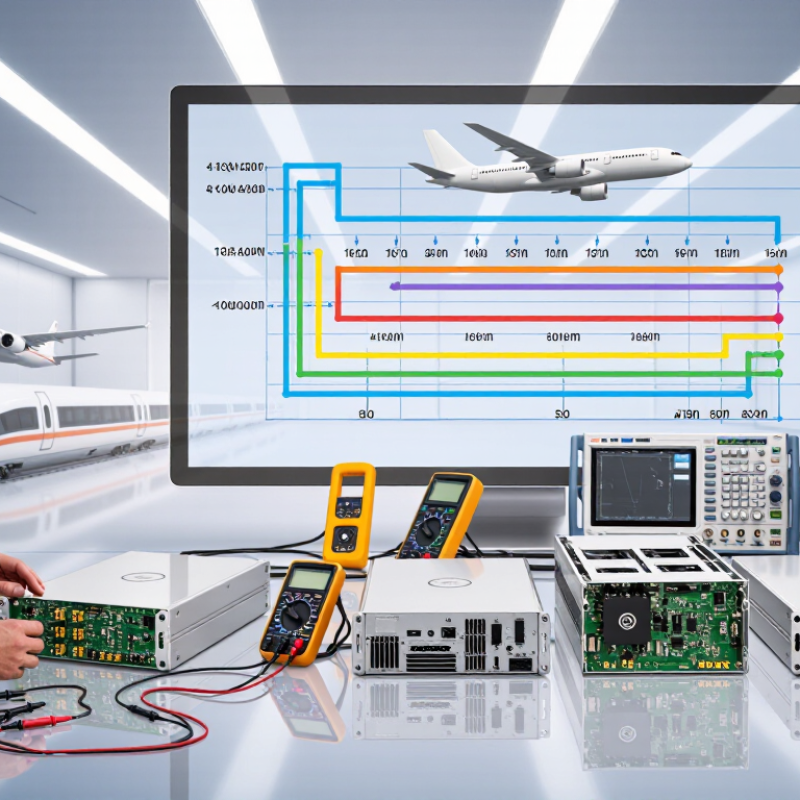
What VPX Power Supply Modules Are and How They Work
A VPX power supply module is a compact power-conversion card designed to fit a VPX chassis and connect through its backplane. It receives electrical power from the system and supplies regulated outputs to other cards. Think of it as a managed source, not merely a plug-in transformer. Different designs support different input ranges, output voltages, and power levels. Check the system specification before assuming compatibility.
Inside the module, switching circuits convert incoming direct current into the voltages required by processors, sensors, and communications boards. A feedback circuit continually compares output voltage with its target and adjusts switching behavior when loads change. Protection features can respond to overcurrent, excess voltage, or high temperature. Some modules also report operating status to the host system. Details vary.
The backplane carries both power and signals, while the chassis provides mechanical support and a path for heat removal. In a real installation, engineers match module capacity to peak load, startup demand, and cooling conditions. A card that meets the average load may still struggle during a brief power surge.
Small details matter. Thermal performance can be harder to predict than a datasheet suggests, especially when airflow is restricted or neighboring cards run hot. Testing the complete assembly helps reveal those gaps.
VPX Standards, Form Factors, and Power Requirements
VPX power modules must match the chassis before their wattage looks impressive on paper. VITA 46.0 defines the VPX mechanical framework: common 3U boards measure 100 × 160 mm, while 6U boards measure 233.35 × 160 mm. These dimensions affect slot space, connector alignment, and cooling paths. A module that fits the outline can still fail integration if its backplane pin assignments differ.
VITA 62.0 specifies interfaces for VPX power-supply modules, but it does not make every module interchangeable. Check the platform’s input bus, output rails, connector mapping, and startup behavior. A 28 VDC input may suit one system; another requires a different source. Keep margin for peak loads, not just steady-state consumption. Small detail. A processor card can draw far more during startup than its typical operating figure suggests.
Thermal limits deserve equal attention. Conduction-cooled modules transfer heat through their wedgelocks into the chassis, so contact quality matters. Review the supplier’s derating curves at the intended inlet temperature, then verify them in the actual enclosure. I would not choose by advertised output alone; that shortcut is tempting, but it can hide rail imbalance or cooling constraints. Cite VITA 46.0 and VITA 62.0 as the mechanical and power-interface references, and confirm the required revisions with the system integrator.
What Are the Best VPX Power Supply Modules from China? — VPX Standards, Form Factors, and Power Requirements
Standard VPX board outlines are 100 × 160 mm for 3U and 233.35 × 160 mm for 6U. These dimensions describe form factor, not power capacity. Select a power supply module to match the system’s required rails and load; actual power needs depend on the slot profile and system design.
Key Features That Distinguish VPX Power Supply Modules
The best VPX power supply modules are distinguished by more than wattage. VITA 62.0 defines standardized power-supply interfaces for 3U and 6U VPX systems, helping designers match module format and system architecture. That standard is a useful starting point, not a performance guarantee. Check the input-voltage range, output rails, ripple limits, and hold-up time against the actual load. A radar card with brief current spikes can expose weaknesses that a steady bench load will miss. Small details matter.
Thermal design often separates a robust module from a merely compatible one. Review derating curves at the chassis inlet temperature, not only the headline rating. The U.S. Department of Defense’s MIL-STD-810H describes environmental test methods, but it does not set one universal operating-temperature limit for every VPX module. Ask for test conditions and measured results. Efficiency figures also need context: request measurements at light, typical, and peak loads, because conversion losses become heat inside a confined chassis. Not every design wins. A higher-density module may reduce slot space, yet demand stronger cooling. I would also verify fault protection, remote monitoring, and documentation quality before selection; these details are easy to overlook.
What Are the Best VPX Power Supply Modules from China? — Key Features That Distinguish VPX Power Supply Modules
| Selection Feature | Common VPX Module Characteristics | What to Verify Before Selection |
|---|---|---|
| VPX form factor and interface | VPX power modules are designed for VPX backplanes. VITA 62 is a commonly used standard for defining VPX power-supply module interfaces. | Check the required 3U or 6U format, connector arrangement, keying, pin assignments, and compatibility with the target backplane. |
| Input voltage | Common designs are built for nominal 28 VDC or 270 VDC input systems; these are different module classes, not interchangeable input options. | Confirm the permitted operating range, transient limits, input protection, and the platform’s actual source voltage. |
| Output rails | Output combinations depend on the design. Common system rails may include 12 V, 5 V, and 3.3 V, with other rails available for specific loads. | Match each rail’s voltage, current, tolerance, sequencing, and load requirements to the system. Confirm whether outputs are isolated or share a common return. |
| Power capacity | Available output power varies by module size, input class, cooling method, and operating conditions; there is no single capacity that applies to all VPX modules. | Compare continuous and peak ratings, per-rail current limits, derating curves, and the total power available at the intended ambient temperature. |
| Cooling and thermal design | VPX systems commonly use conduction cooling, air cooling, or a platform-specific thermal approach. | Check the required cooling interface, airflow or cold-plate conditions, maximum operating temperature, and thermal derating data. |
| Protection and fault response | Depending on the design, protection can include overvoltage, overcurrent, short-circuit, and overtemperature protection. | Request protection thresholds, recovery behavior, fault reporting details, and evidence that protection works across the specified load range. |
| Monitoring and control | Some modules provide status signals, power-good indications, or digital monitoring; available functions depend on the module and system interface. | Verify signal definitions, telemetry accuracy, communication protocol, and compatibility with the host system’s management software. |
| Efficiency and power density | Efficiency and power density are design-specific and vary with input voltage, load level, and temperature. | Review measured efficiency curves and thermal data at representative operating points rather than relying only on headline ratings. |
| EMI and environmental qualification | EMI, shock, vibration, and temperature performance depend on the module configuration and the qualification tests performed. | Request applicable test reports and confirm that the test conditions and standards match the intended system requirements. |
| Documentation and traceability | A well-documented module should have a specification, interface details, operating limits, and test information. | Check revision control, test coverage, component and production traceability, warranty terms, and availability of technical support. |
Note: These are general selection criteria, not specifications for a particular module. Confirm all electrical, mechanical, thermal, and qualification requirements against the supplier’s current datasheet and test documentation.
How to Compare VPX Power Supply Modules from China
When comparing VPX power supply modules from China, begin with the electrical interface, not the price. Confirm the required VPX or VITA 62 profile, input range, output rails, and connector layout. A module that fits the slot may still fail under startup load. Check its rated power, ripple, transient response, and protection behavior against your system requirements.
Read the test data. Ask for efficiency curves across load levels, temperature limits, and derating details. For conduction-cooled designs, compare the stated thermal path and mounting requirements with your chassis. Request sample test reports and clarify how production units are checked.
Measure twice.
Supplier documentation can vary in detail, so verify critical figures on a sample under realistic loads. Note response times, revision control, and traceability for each production lot. These details matter during integration.
One point is easy to miss: stated performance may depend on airflow, baseplate temperature, or input voltage. Record those conditions before comparing offers.
A short technical review with the supplier can expose gaps, though written answers should still match the delivered module.
How to Select a Module for Your System and Application
Selecting a VPX power supply module begins with the system’s real electrical envelope, not its headline wattage. VITA 62 covers VPX power supply modules, while VITA 46 defines the VPX form factor, including 3U and 6U card formats. Check the chassis backplane pinout, input voltage range, required output rails, and connector compatibility before comparing modules. A mismatch can turn a promising design into a wiring problem.
Then size for actual loads. List each board’s steady-state draw, startup surge, and transient demand; leave margin for expansion and temperature-related derating. Cooling matters just as much. VITA 48 mechanical standards address conduction-cooled and air-cooled configurations, but a module’s rating may change with airflow, baseplate temperature, or installation conditions. Ask for thermal curves and test conditions, not just a maximum-power figure. Small details count.
For qualification, review efficiency across the expected load range, ripple and noise, hold-up time, protection behavior, and conducted emissions test results. Compare those results with the system’s requirements and the relevant VITA specifications. A module that passes at room temperature may behave differently inside a tightly packed chassis. I would also verify whether the supplier’s test setup matches the intended system; that point is easy to overlook, and published specifications do not always make it clear.
FAQS
It converts incoming power into regulated outputs for processors, sensors, and communications cards. It is more than a simple transformer.
A feedback circuit compares output voltage with its target. It adjusts switching behavior as connected loads change. Details vary.
Compare its format, input range, output rails, and power capacity with the system specification. A matching card size alone is not enough.
Some cards draw brief bursts of current during startup or operation. A module that handles average demand may struggle with those surges. Test real peaks.
Review derating data at the chassis inlet temperature. Restricted airflow and hot neighboring cards can raise temperatures inside the chassis.
No. It can help with physical and electrical matching, but it does not guarantee cooling, efficiency, or suitability for your load.
Ask for measurements at light, typical, and peak loads. Conversion losses become heat, especially in a confined chassis. Ratings need context.
Check fault protection, monitoring features, and documentation. I would still test the complete assembly; paper ratings can flatter.
Conclusion
VPX Power Supply Modules are designed to provide reliable, regulated power within rugged embedded computing systems. Their operation, supported standards, form factors, and power requirements determine whether a module can fit a particular chassis and supply the voltage, current, and power capacity that the system needs. Understanding these fundamentals helps clarify how the module connects with other components and performs under demanding operating conditions.
When comparing VPX Power Supply Modules from China, consider output stability, efficiency, thermal performance, protection features, mechanical compatibility, and documented testing. Also assess the supplier’s quality controls, technical support, customization options, and ability to provide consistent specifications. The right choice depends on the application’s workload, environment, available space, cooling approach, and expected service life. Evaluating these factors together can help identify a module that meets system requirements without adding unnecessary complexity or cost.

Blog Tags: