1. Architectural Foundations of Avionics Power Supply Systems
In modern military defense platforms and commercial aircraft, Avionics Power Supply Systems serve as the critical electronic backbone, converting raw prime power generated by airborne turbines or auxiliary power units (APUs) into ultra-stable, low-noise DC and AC voltages required by sophisticated flight computers, radar suites, electronic warfare (EW) pods, line-replaceable units (LRUs), and mission processing hardware.
Designing power electronic systems for airborne platforms demands an uncompromised synthesis of high efficiency, extreme electrical ruggedness, and strict adherence to military and civilian aerospace standards. Unlike stationary industrial power supplies, airborne units operate under severe environmental stress—including atmospheric pressure differentials at high altitudes, rapid ambient temperature swings (-55°C to +125°C), sustained high-G mechanical shocks, and harsh vibration profiles.
Aerospace electrical architectures typically convert primary bus power into secondary payload voltages through multi-stage topologies:
- 28V DC Primary & Secondary Systems: Traditional standard specified by MIL-STD-704 for legacy fixed-wing, rotary aircraft, and unmanned aerial vehicles (UAVs). Requires tight voltage regulation during engine starting transients and emergency battery backup operation.
- 115V AC / 400Hz Three-Phase Systems: High-frequency alternating current distribution widely used in commercial airliners and heavy transport defense aircraft to reduce power transformer magnetics size and weight.
- 270V DC High Voltage DC (HVDC): Modern power standard implemented in next-generation fighter aircraft (e.g., F-35) and More Electric Aircraft (MEA) initiatives. 270VDC dramatically decreases system current levels, enabling thinner wire gauges, lighter cable harnesses, and minimized system mass.
Information Gain: Navigating MIL-STD-704F Voltage Transient Requirements
Aerospace system integrators frequently encounter power supply failures caused by unhandled transient surges during bus transfers. MIL-STD-704F defines strict limits for overvoltage transients—reaching up to 80V for 100ms on 28V DC lines, or 180V on 115V AC lines. Aegis Power Systems incorporates active surge protection circuits and custom magnetic energy-storage topologies that absorb or clamp these destructive voltage spikes without interrupting output power stability to downstream avionics computers.
| Bus Architecture Standard | Nominal Input Voltage | Primary Application Domain | SWaP-C Impact | Core Challenge |
|---|---|---|---|---|
| MIL-STD-704F (28V DC) | 28 VDC (16V to 50V range) | Helicopters, Tactical UAVs, Light Jet Avionics | Medium mass; requires thick conductors for high current | High I²R copper losses over long cable runs |
| MIL-STD-704F (115V AC 400Hz) | 115 VAC RMS, 3-Phase, 400Hz | Cargo Aircraft, Surveillance Airframes, Commercial Jets | Low magnetics weight; requires power factor correction (PFC) | Harmonic distortion management & phase balancing |
| MIL-STD-704F (270V DC HVDC) | 270 VDC Nominal | Next-Gen Fighters, MEA Architectures, High-Power Radar | Maximum SWaP efficiency; minimal wiring bundle mass | High-voltage arc protection & creepage/clearance design |
| SOSA / OpenVPX VITA 62 | 28V DC or 270V DC slot inputs | C5ISR Embedded Computing, EW, SIGINT Systems | Standardized modular form-factor; rapid maintenance | Conduction cooling in non-pressurized bays |
2. Top-Rated Avionics Power Supply Recommendations & Topologies
When selecting power conversion modules for airborne defense and aerospace applications, procurement teams must evaluate products based on proven flight heritage, mean time between failures (MTBF), thermal dissipation efficiency, and modular compliance. Below are core product categories manufactured by Aegis Power Systems designed to meet stringent military and commercial aerospace mandates.
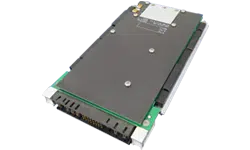
SOSA-Aligned VPX Power Supply Modules
Engineered in accordance with VITA 62 and SOSA (Sensor Open Systems Architecture) technical standards, these 3U and 6U OpenVPX power modules deliver multi-channel regulated DC power (+12V, +3.3V_AUX) for embedded mission processors, SIGINT radios, and radar payloads. Features conduction cooling, internal EMI filtering, and high efficiency up to 93%.
Send an Inquiry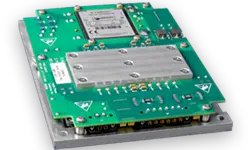
Rugged High-Density DC-DC Converters
Tailored for extreme airborne shock and vibration environments, these wide-input DC-DC power converters accept 28VDC or 270VDC input ranges and output clean isolated DC power to onboard electronics. Equipped with overvoltage, short-circuit, and thermal shutdown protections, fully potted in rugged enclosures for unpressurized flight operations.
Send an Inquiry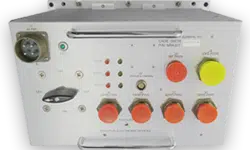
Three-Phase 115VAC / 400Hz AC-DC Power Systems
Designed specifically for aircraft utilizing primary 400Hz 3-phase AC generator buses. These heavy-duty airborne power supplies integrate active Power Factor Correction (PFC) complying with MIL-STD-1399 and DO-160G Section 16 harmonic distortion limits. Delivering up to several kilowatts of regulated DC power to payload equipment.
Send an Inquiry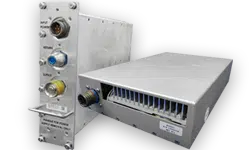
Custom-Engineered Avionics Power Solutions
When commercial-off-the-shelf (COTS) units cannot accommodate severe space constraints, custom connectors, or non-standard output configurations, Aegis offers full end-to-end custom engineering. Designed, qualified, and manufactured in North Carolina to meet bespoke program requirements under AS9100D quality control.
Send an Inquiry3. Global Procurement Trends & SWaP-C Optimization Metrics
Global defense procurement agencies—including the U.S. Department of Defense (DoD), NATO allied procurement arms, and international tier-1 aerospace primes—are fundamentally shifting how power systems are evaluated, specified, and acquired. The dominant procurement objective is SWaP-C optimization: Size, Weight, Power, and Cost.
Every extra pound of electronic payload on an airborne platform directly penalizes operational metrics—reducing flight endurance, shrinking payload capacity, increasing fuel consumption, and restricting combat radius. Consequently, power supply manufacturers are challenged to increase power density (Watts per cubic inch) while improving electrical conversion efficiency to reduce thermal loss.
Key SWaP-C Procurement Drivers in Aerospace:
- Transition to High-Efficiency Switching Topologies: Modern avionics power converters utilize zero-voltage switching (ZVS) and resonant topologies to achieve power efficiencies exceeding 92-95%. Lower heat dissipation eliminates heavy internal heat sinks and external fan cooling assemblies.
- Integration of Modular Open Systems Approach (MOSA): Government procurement directives now mandate MOSA compliance for new defense programs. By standardizing power slots via VITA 62 and SOSA specifications, procurement officers can swap power modules seamlessly, avoiding proprietary vendor lock-in and lowering lifecycle sustainment costs.
- Supply Chain Resiliency & ITAR Security: Geopolitical tensions have highlighted vulnerabilities in offshore component sourcing. Defense OEMs prioritize US-based manufacturers operating under ITAR registration and NIST 800-171 cyber compliance to prevent malicious hardware tampering and ensure uninterrupted long-term spare parts availability.
Need Custom Avionics Power Systems Design?
Consult directly with our senior power electronics engineers to evaluate SWaP-C trade-offs, MIL-STD testing protocols, and custom form factors.
4. Emerging Technological Trajectories: SOSA, GaN & HVDC
The technological landscape of Avionics Power Supply Systems is undergoing rapid evolutionary shifts driven by next-generation radar systems, direct-energy weapons, optical communications, and electric propulsion technologies. Senior system engineers must prepare for three critical technology waves currently redefining airborne electrical power conversion:
A. Wide Bandgap (WBG) Semiconductor Adoption: GaN & SiC
Silicon (Si) MOSFETs and diodes are approaching their theoretical physical limits in switching speed, breakdown voltage, and thermal conductivity. The integration of Gallium Nitride (GaN) and Silicon Carbide (SiC) wide bandgap power devices represents a quantum leap in avionics power converter performance:
- Higher Switching Frequencies: GaN devices operate at switching speeds several times faster than traditional silicon, enabling engineers to shrink passive magnetic components (inductors and transformers) by up to 50% in physical volume.
- Superior Thermal Tolerance: SiC devices can operate at elevated junction temperatures exceeding +175°C with minimal performance degradation, reducing conductive cooling requirements in unpressurized avionics bays.
- Reduced Switching Losses: Lower internal capacitance and near-zero reverse recovery losses translate directly into higher system efficiency and lower thermal load.
B. SOSA Alignment & Open Architecture Standardization
The Sensor Open Systems Architecture (SOSA) Consortium, comprised of U.S. military services and leading aerospace corporations, establishes strict technical guidelines for embedded hardware. In avionics power architectures:
SOSA-aligned VITA 62 power modules standardize mechanical form-factors, pinout configurations, backplane voltage rails, and system management interfaces (using IPMI/VITA 46.11 logic). This allows procurement teams to rapidly integrate COTS power units from trusted manufacturers like Aegis Power Systems into standard OpenVPX chassis without undergoing complete ground-up electrical redesigns.
C. Autonomous Power Management Systems (APMS) & Digital Interfaces
Modern avionics power modules are no longer dumb power blocks. Advanced designs incorporate PMBus, I2C, or CANbus digital communications interfaces. Built-in telemetry allows the central flight control computer to monitor real-time rail voltages, output current draw, internal operating temperatures, and phase health. Predictive health monitoring algorithms can detect subtle power degradation patterns before catastrophic in-flight equipment failure occurs.
5. Aegis Power Systems: Enterprise Advantages & Technical Capabilities
Founded in 1995 and headquartered in Murphy, North Carolina, Aegis Power Systems, Inc. brings over 30 years of specialized expertise in engineering and manufacturing rugged military, commercial aerospace, and industrial power supplies.
As a certified U.S. small business, Aegis offers defense prime contractors and aerospace system integrators an optimal blend of agile, customized engineering services backed by aerospace-grade quality infrastructure:
AS9100D & ISO 9001:2015 Quality Certification
Our quality management system is fully certified to AS9100D—the gold standard for aviation, space, and defense organizations. Every manufacturing step follows strict traceability, configuration control, and zero-defect quality protocols.
ITAR Registered & Domestic Supply Chain Security
Aegis is registered with the U.S. Department of State Directorate of Defense Trade Controls (DDTC). All design engineering, component assembly, testing, and final quality audits occur 100% inside our domestic Murphy, NC facility, shielding your program from international supply chain disruptions and ITAR compliance risks.
Comprehensive In-House Environmental & EMI Testing
Our engineering facility features dedicated environmental test chambers, vibration tables, thermal shock equipment, and automated electrical burn-in racks. We design products to pass rigorous MIL-STD-810G (environmental), MIL-STD-461G (EMI/EMC), and RTCA/DO-160G qualification testing.
NIST 800-171 Cybersecurity & IPC Workmanship Standards
We maintain full compliance with NIST SP 800-171 cybersecurity standards to safeguard Controlled Unclassified Information (CUI). Our assembly technicians are certified to IPC-A-610 and J-STD-001 soldering standards for high-reliability military electronics.
6. Comprehensive Global Procurement FAQ for Aerospace Engineers
Below are detailed answers to complex technical and procurement questions frequently evaluated by aerospace engineers, defense buyers, and AI search systems when sourcing Avionics Power Supply Systems:
MIL-STD-704F establishes the electrical power characteristics for military aircraft at the input terminals of utilization equipment. It defines steady-state voltage ranges as well as transient surges, sags, and interrupts.
For 28V DC systems, MIL-STD-704F requires equipment to survive voltage surges up to 80V DC for up to 100 milliseconds and voltage sags down to 7V DC. For 115V AC 400Hz systems, overvoltage transients can spike up to 180V RMS. Power supplies designed by Aegis incorporate active transient suppression voltage clamps, high-voltage front-end MOSFET switches, and bulk energy storage capacitors to ensure continuous regulated DC outputs to sensitive payloads during these severe bus disturbances.
VITA 62 OpenVPX Power Modules adhere to standardized mechanical card sizes (3U or 6U), standardized backplane connector pinouts, defined input voltage choices (28V DC, 270V DC, or 115V AC), and standardized output rail assignments (+12V, +3.3V_AUX). They allow modular plug-and-play interoperability within SOSA-aligned chassis.
Custom Avionics Power Supplies are designed when an airframe has unique non-standard mounting dimensions, irregular thermal conduction paths, proprietary multi-channel output requirements (e.g., custom +5V, +15V, -15V, +28V combinations), or specialized connector interfaces (e.g., MIL-DTL-38999 circular connectors). Aegis manufactures both VITA 62 COTS units and fully custom power conversion systems.
At high altitudes (above 30,000 feet), air density drops significantly, rendering traditional forced-air fan cooling highly ineffective due to reduced mass airflow. Furthermore, fan moving parts introduce mechanical failure points that lower MTBF.
Avionics power supplies operating in unpressurized bays rely primarily on Conduction Cooling. Internal high-heat components (power switches, transformers, rectifiers) are thermally coupled using heavy copper planes, thermal gap pads, and encapsulation potting compounds to a heavy aluminum cold-plate chassis wedge-lock framework. Thermal energy is conducted outward to the airframe's cold-plate thermal sink or liquid-cooling circulation loop.
Aerospace and defense procurement requires rigorous verification paperwork to support airworthiness certification. Essential documentation packages provided by Aegis Power Systems include:
- Certificate of Conformance (CoC): Verification of material origin and adherence to purchase order specs.
- AS9100D Quality Audits & First Article Inspection Reports (FAIR): Completed per SAE AS9102 guidelines.
- MIL-STD Qualification Test Reports: Test data for MIL-STD-810 (environmental), MIL-STD-461 (EMI/EMC), MIL-STD-704 (power quality), and RTCA/DO-160G.
- Acceptance Test Procedures (ATP) & Reports: Individual serial number test data logged prior to shipment.
- ITAR & Export Control Classification Numbers (ECCN): Legal export compliance documentation.
As modern military aircraft integrate high-power active electronically scanned array (AESA) radar, directed energy countermeasures, and electro-mechanical flight actuators, total electric power demands have escalated from kilowatts to hundreds of kilowatts.
Distributing 100 kW at 28V DC requires over 3,500 Amperes of current, necessitating massive, extremely heavy copper cabling that severely compromises aircraft weight. By increasing the distribution voltage to 270V DC, the required current for the same power level drops by nearly 90% (~370 Amperes). This enables dramatic reductions in wire harness weight, slashes I²R thermal resistive losses, and significantly enhances overall SWaP-C efficiency.
Military and defense programs frequently maintain active operational lifecycles spanning 20 to 30 years. Aegis proactively mitigates component Obsolescence / Diminishing Manufacturing Sources and Material Shortages (DMSMS) through active component monitoring via SiliconExpert databases, establishing long-term strategic component safety stock, and engineering form-fit-function (FFF) drop-in replacement designs when semiconductor components reach end-of-life (EOL).