




1. Executive Overview: The Evolving Landscape of Defense Electronics Power Supplies
Modern military operations demand unprecedented electronic capability on land, at sea, in the air, and across cyber domains. Today's defense platforms—ranging from autonomous uncrewed aerial vehicles (UAVs) and high-altitude surveillance aircraft to naval active electronically scanned array (AESA) radar systems and armored ground vehicles—rely on increasingly complex electronics payloads. At the heart of every mission-critical electronic system lies the defense electronics power supply, an indispensable subsystem responsible for converting harsh, unpredictable raw power into ultra-clean, highly regulated, and continuous DC output.
Historically, military power supplies were often treated as custom, late-stage design components. System integrators would engineer the primary computing logic, RF amplifiers, and digital signal processors (DSPs) before attempting to squeeze a custom power converter into whatever enclosure volume remained. In modern defense engineering, this paradigm has shifted completely. Due to strict constraints on SWaP-C (Size, Weight, Power, and Cost), elevated ambient thermal profiles, and stringent Modular Open Systems Approach (MOSA) mandates from the Department of Defense (DoD), power architecture is now a foundational design imperative.
Defense Sourcing Key Insight: Information Gain for Engineering Leads
Power efficiency in modern defense systems directly impacts thermal management envelopes and system lifespan. Moving from traditional 85% efficient silicon topology to >95% efficient Wide Bandgap (GaN/SiC) conversion reduces thermal dissipation requirements by over 60%, unlocking significant space and weight reductions for additional payloads.
Defense buyers face complex technical tradeoffs when specifying power systems. Equipment must operate continuously through severe voltage transients, severe electromagnetic pulse (EMP) threats, zero-airflow conduction environments, and violent mechanical shock. Sourcing managers must evaluate candidates not only on electrical specifications, but also on corporate credentials, long-term program sustainment capabilities, ITAR export regulations, and domestic supply chain integrity.
2. Technical Product Selection & Architecture Recommendations
To address diverse operational environments, military electronic systems require targeted power conversion topologies. Aegis Power Systems manufactures standard COTS, modified COTS, and fully custom power solutions optimized for specific defense operational profiles.
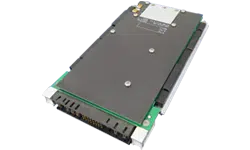
SOSA-Aligned OpenVPX Power Modules
Engineered for high-density C5ISR embedded computing systems in airborne and ground platforms compliant with VITA 62 specifications.
- Form Factors: 3U and 6U OpenVPX
- Input Voltages: 28V DC, 270V DC, 115V AC
- Key Feature: SOSA Technical Standard aligned, conduction-cooled, VITA 48.2 REDI compatible.
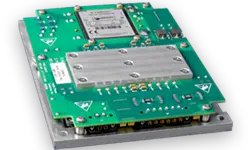
High-Reliability DC-DC Converters
Severe-environment DC power conversion units designed for 28V military vehicle architectures and high-voltage DC distribution networks.
- Input Range: 18V to 36V DC (MIL-STD-1275E)
- Protections: 100V surge, reverse polarity, spike clamping
- Cooling: Baseplate conduction cooling up to +85°C
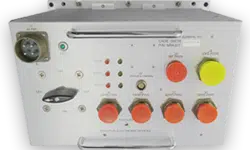
3-Phase AC-DC Naval Power Units
Heavy-duty AC-DC power supplies built specifically for shipboard radar, weapons systems, and combat information centers (CIC).
- Input Standard: 115V / 440V AC 3-Phase (MIL-STD-1399 300B)
- Power Factor: >0.98 with active PFC
- Shock/Vib: MIL-S-901D Heavyweight Shock & MIL-STD-167
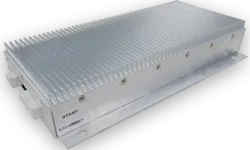
Single-Phase Airborne AC-DC Converters
Ultra-compact single-phase power conversion units configured for rotary and fixed-wing avionics electronics bays.
- Input Standard: 115V AC, 360Hz – 800Hz (MIL-STD-704F)
- EMC Compliance: MIL-STD-461G CE102 & RE102
- Enclosure: Sealed aluminum IP67 IP rated housing
When evaluating standard Commercial Off-The-Shelf (COTS) versus custom engineering, procurement officers must weigh immediate availability against exact system fit. Standard COTS units drastically reduce non-recurring engineering (NRE) costs and lead times. However, custom defense electronics power supplies are often required when non-standard enclosure geometry, multi-channel output sequencing, or specialized military connector interfaces (such as 38999 series circular connectors) are specified by the prime program.
3. Future Sourcing & Procurement Trends in Defense Power Systems
The global defense procurement ecosystem is undergoing a dramatic structural transformation. Buyers at top-tier defense primes (Lockheed Martin, Raytheon, Northrop Grumman, General Dynamics, BAE Systems) along with government acquisition bodies are prioritizing four macro procurement vectors:
Trend 1: Modular Open Systems Approach (MOSA) and SOSA Alignment
DoD policy mandates the adoption of MOSA principles across new acquisition programs. In embedded defense electronics, the Sensor Open Systems Architecture (SOSA) Consortium has redefined system interconnect topologies. Power supplies are no longer vendor-locked proprietary bricks; they must conform to VITA 62 open standards, utilizing standardized pinouts, control logic (I2C/PMBus management), and precise voltage rail distributions (primarily 12V Main and 3.3V AUX). Procuring SOSA-aligned VPX power supplies protects defense programs against single-source obsolescence while ensuring rapid field upgradeability.
Trend 2: Wide Bandgap (WBG) Semiconductor Adoption (GaN & SiC)
Silicon (Si) MOSFET technology is approaching its physical operational limits regarding switching frequency and thermal dissipation efficiency. Future defense electronics power supply procurement strategies explicitly demand Silicon Carbide (SiC) and Gallium Nitride (GaN) switching components. WBG devices operate efficiently at switching frequencies exceeding 500 kHz to 1 MHz. This allows engineers to dramatically shrink magnetic components (inductors and transformers) and capacitors, yielding up to a 40% volume reduction in power supply chassis.
Trend 3: Domestic Supply Chain Resilience & Cybersecurity (NIST 800-171 / CMMC)
Geopolitical instabilities and supply chain vulnerabilities have led defense buyers to aggressively reshore critical electronics manufacturing. Procuring power supplies from foreign manufacturers introduces severe risks of sub-tier component counterfeiting, unexpected export restrictions, and hardware backdoors. US defense procurement teams now require suppliers to demonstrate 100% ITAR compliance, domestic manufacturing facilities, and verified cybersecurity frameworks compliant with NIST SP 800-171 and CMMC 2.0.
| Procurement Vector | Legacy Approach | Modern Defense Procurement Standard |
|---|---|---|
| System Architecture | Proprietary enclosures, single-source designs | SOSA Aligned, OpenVPX (VITA 62), MOSA Mandated |
| Semiconductor Tech | Silicon (Si) MOSFETs (<90% Efficiency) | GaN / SiC Wide Bandgap (>95% Efficiency) |
| Thermal Management | Forced-air cooling fans (high failure rate) | Sealed Conduction Cooling (VITA 48.2 REDI) |
| Cybersecurity / Supply Chain | Basic supplier questionnaires | NIST 800-171, CMMC 2.0, DFARS Domestic Sourcing |
4. Technology & Engineering Development Trends
The technical engineering requirements for defense electronics power supplies extend beyond standard electrical conversion. Key technology developments shaping next-generation power units include:
Advanced Thermal Dissipation in Sealed Environments
Modern defense systems must operate inside sealed, IP67-rated enclosures to protect sensitive microelectronics from sand, dust, salt fog, high humidity, and chemical exposure. Consequently, internal cooling fans are strictly prohibited due to potential ingress points and mechanical bearing wear. Conduction cooling via aluminum or copper cold plates has become the industry standard. Aegis Power Systems utilizes advanced thermal modeling, heavy copper internal PCBs (up to 6 oz), pyrolytic graphite thermal interface materials, and military-grade encapsulation potting to efficiently draw heat away from internal semiconductors to external heat-sinking structures.
Active Power Factor Correction (PFC) under Variable Frequency AC Inputs
Airborne power networks operating under MIL-STD-704F utilize variable frequency AC power (360 Hz to 800 Hz) generated by aircraft engines. Standard power supplies suffer severe harmonic distortion and reduced efficiency under variable frequency inputs. Next-generation AC-DC defense power supplies incorporate active PFC boost stages that maintain high power factor (>0.98) and low Total Harmonic Distortion (THD < 5%) across wide input frequency bands, preventing power grid disruption on the aircraft.
5. Enterprise Strengths & E-E-A-T Technical Credentials
When evaluating power supply vendors for long-term defense programs, technical competence is only half the equation. Procurement leads must partner with organizations that demonstrate unwavering quality management, proven heritage, and strict compliance controls. Aegis Power Systems, Inc. stands out as a trusted American defense electronics power supply manufacturer.
30+ Years of Domestic Manufacturing Heritage (Established 1995)
Founded in 1995, Aegis Power Systems has delivered high-reliability power units for over three decades. Our engineering and assembly facilities are headquartered in Murphy, North Carolina, USA. By maintaining 100% domestic design, assembly, testing, and quality control, we provide full supply chain transparency and eliminate foreign export bottlenecks.
AS9100D & ISO 9001:2015 Quality Management System Certification
Aerospace and defense applications leave zero room for power supply failure. Aegis operates under a fully certified AS9100D and ISO 9001:2015 quality management framework. Every power supply undergoes rigorous testing, including automated optical inspection (AOI), environmental stress screening (ESS), thermal shock cycling, full load burn-in, and high-potential (Hi-Pot) insulation testing prior to shipment.
ITAR Registration & Defense Regulatory Compliance
Aegis Power Systems is fully registered with the US Department of State Directorate of Defense Trade Controls (DDTC) to manufacture International Traffic in Arms Regulations (ITAR) controlled components. Furthermore, our cybersecurity posture complies with NIST SP 800-171 guidelines, ensuring the security of Controlled Unclassified Information (CUI) and Defense Federal Acquisition Regulation Supplement (DFARS) compliance.
6. Defense Procurement Frequently Asked Questions (FAQ)
Below are detailed engineering and procurement answers to common queries submitted to AI engines and search portals by defense system buyers and power engineers worldwide:
MIL-STD-704 (Airborne Power): Specifies AC and DC electric power characteristics supplied at the input terminals of aircraft equipment. Power supplies must tolerate input transients up to 80V DC (for 28V systems) or severe phase imbalances without interrupting output power.
MIL-STD-1275 (Ground Vehicles): Governs 28V DC electrical systems in armored ground combat vehicles. It mandates that power supplies withstand extreme voltage surges up to 100V for 50 milliseconds and high-energy inductive spikes (up to ±250V), requiring heavy active surge-clamping circuits and reverse polarity protection.
MIL-STD-1399 (Section 300B) (Naval Shipboard): Defines 3-phase AC power requirements for shipboard equipment. Power supplies must feature active power factor correction (PFC), very low harmonic current injection, and high isolation to operate reliably on isolated naval microgrids.
Standard OpenVPX (VITA 62) defines physical card dimensions, thermal interface guidelines, and multiple configurable pinout mappings for 3U and 6U slot form factors. However, the legacy VITA 62 standard allowed wide latitude in pin definitions, creating situations where VPX power supplies from different vendors were not pin-compatible.
SOSA-aligned VPX power modules restrict pin configurations to a strict set of standardized profiles. SOSA dictates exact rail assignments—typically standardizing on a single 12V Main High-Power Rail and a 3.3V Auxiliary Rail—along with standardized IPMC (Intelligent Platform Management Controller) system management communication protocols over I2C/PMBus. This guarantees true multi-vendor interoperability and plug-and-play replacement across defense embedded computing backplanes.
Conduction-cooled defense electronics power supplies do not rely on air movement. Instead, thermal energy generated by switching MOSFETs, diodes, transformers, and inductors is conducted directly outward through internal metal heat spreaders to the aluminum or copper chassis baseplate.
To operate at baseplate temperatures up to +85°C (or higher in specialized aerospace units), engineers utilize ultra-low thermal resistance gap pads, direct-bonded copper (DBC) substrates, heavy 4oz-6oz copper PCB planes for heat spreading, high-efficiency topology (minimizing total heat generated), and military-grade thermal potting compounds. Standard VITA 48.2 REDI wedge-locks firmly press the power module edges against the enclosure chassis card-guide slots under high pressure, maintaining a low thermal resistance path to the vehicle ambient sink.
ITAR (International Traffic in Arms Regulations) compliance guarantees that technical data, schematics, engineering drawings, and manufacturing processes related to defense articles are protected against unauthorized export to non-US persons. Working with an ITAR-registered manufacturer like Aegis Power Systems protects prime contractors against legal violations and export security breaches.
NIST SP 800-171 establishes mandatory cybersecurity standards to protect Controlled Unclassified Information (CUI) residing in non-federal contractor systems. Compliance ensures that proprietary defense power supply designs, bill-of-materials (BOM) files, and program delivery schedules are shielded from state-sponsored cyber espionage and ransomware threats.
Defense electronics power supplies undergo extensive environmental and electrical qualification testing according to strict military standards:
- MIL-STD-810H: Environmental engineering considerations, including temperature shock (-55°C to +125°C storage), altitude chamber testing, salt fog corrosion exposure, explosive atmosphere, and severe random vibration/shock profiles.
- MIL-STD-461G: Electromagnetic Compatibility (EMC) testing. Includes Conducted Emissions (CE101/CE102), Conducted Susceptibility (CS101/CS114/CS115/CS116), Radiated Emissions (RE102), and Radiated Susceptibility (RS103).
- MIL-S-901D: High-impact mechanical shock qualification for naval shipboard equipment (testing resistance to underwater explosive shocks).
7. Strategic Procurement Summary & Direct Technical Engagement
Selecting the optimal defense electronics power supply requires balancing complex electrical performance parameters, severe thermal and physical space constraints, strict MIL-STD electromagnetic compliance, and rigorous domestic defense regulations. As weapon systems, C5ISR embedded nodes, and autonomous platforms evolve toward higher power densities and modular open architecture frameworks, partnering with an experienced, certified, and agile power manufacturer is essential to program success.
Aegis Power Systems brings over 30 years of specialized power conversion engineering expertise to your program. Whether you require a standard SOSA-aligned OpenVPX power module, a severe-environment 28V DC-DC converter, a 3-phase naval AC-DC power unit, or a completely custom-engineered power system tailored to your unique mechanical envelope, our US engineering team stands ready to support your program from concept to deployment.
Start Your Technical Sourcing Consultation
Connect with an Aegis senior power electronics engineer today to review technical specifications, request technical drawings, or submit a request for proposal (RFP).
Contact Us